Dubai’s Counter-Drone Shield?
Dubai’s Counter-Drone Shield?

When a drone strike sparked a fire at Dubai’s US consulate and falling debris struck the iconic Burj Al Arab hotel in early March 2026, it shattered the emirate’s carefully cultivated image as an untouchable sanctuary. The glitzy hub of global tourism and logistics has found itself on the frontline of a rapidly evolving aerial arms race. What began a decade ago as a nuisance caused by careless hobbyists has escalated into a complex geopolitical threat involving state-sponsored drone swarms and loitering munitions.
To protect its airspace, Dubai has been forced to deploy one of the world’s most sophisticated, multi-layered counter-unmanned aerial systems (C-UAS) networks.
The evolution of the drone threat in Dubai can be divided into two distinct eras: civilian interference and targeted military aggression.
The era of civilian disruption: Before military-grade munitions entered the theatre, the primary threat to Emirati airspace was the rapid proliferation of consumer drones. Between 2016 and 2019, unauthorized hobbyist drones forced Dubai International Airport (DXB)—one of the world’s busiest aviation hubs—to repeatedly halt operations. A 30-minute closure in February 2019 brought flights to a standstill, cascading into global scheduling chaos.
The era of kinetic warfare: The security paradigm shifted drastically in early 2022 when the UAE was dragged deeper into the regional spillover of the Yemeni civil war. Houthi rebels launched “Operation Hurricane,” targeting Abu Dhabi with drones and ballistic missiles, killing three civilians, and threatening vital facilities in Dubai.
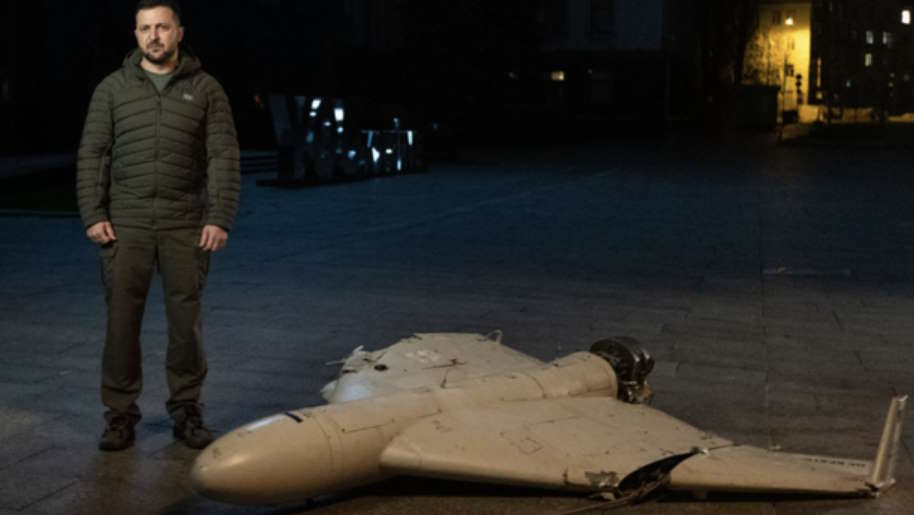
By March 2026, the situation escalated into high-intensity regional conflict during “Operation Epic Fury”. Iran launched a sustained campaign of infrastructure and economic warfare targeting the UAE. During this barrage, a drone strike sparked a major fire at the Jebel Ali deep-sea port, while another caused severe physical damage to an Amazon Web Services (AWS) data centre. The luxury tourism sector was also hit: a Shahed-type drone caused a massive explosion at the Fairmont The Palm hotel, injuring four staff members, while intercepted drone debris caused a minor fire at the Burj Al Arab. The barrage forced a total closure of DXB, resulting in thousands of cancelled flights.
The Solution: Dubai’s Counter-Drone Shield
To combat these asymmetric threats, Dubai has moved away from passive surveillance and invested heavily in a unified “shield” of cooperative tracking, non-kinetic jamming, and autonomous physical interception.
1. Cooperative Tracking and the DMS The first layer of defence is regulatory and preventative. The Dubai Civil Aviation Authority (DCAA) instituted a mandatory Monitoring System (DMS) known as Skytrax. Every legally registered commercial drone in the emirate is fitted with a 58-gram tracking device that transmits real-time telemetry—including altitude, speed, and GPS coordinates—over 2G, 3G, and 4G networks. If a drone deviates by more than 10 metres from its approved flight plan or nears the 5-kilometre exclusion zone around airports, the system instantly fires off automated SMS alerts to both the pilot and DCAA officials to correct the course.
2. Electronic Warfare: Jamming and Spoofing To neutralize hostile, non-cooperative drones, Dubai relies on advanced electronic warfare tech, heavily supplied by the UAE’s sovereign defence manufacturer, EDGE Group.
- SKYSHIELD: A fixed and mobile system that uses X-band radar to detect threats and blasts high-power radio frequency (RF) and GNSS jamming to sever a drone’s command-and-control links up to 10 kilometres away.
- NAVCONTROL-G: Because heavy signal jamming in a smart city like Dubai can cripple civilian infrastructure, authorities also use this sophisticated “spoofing” system. It emits counterfeit GPS signals to trick hostile drones, peacefully misdirecting them away from their targets and onto a safe alternative path.
- ARDRONIS: Provided by Germany’s Rohde & Schwarz, this system protects airports by detecting the radio control signals of drones during their pre-flight checks, offering early warnings before the drone even leaves the ground.
3. Autonomous Kinetic Interceptors When electronic warfare fails, or when dealing with pre-programmed autonomous drones that do not rely on radio signals, Dubai utilizes “hard-kill” interceptor drones.
- Iron Drone Raider: Integrated into the Dubai Police’s public safety infrastructure, this autonomous interceptor is launched from a pod, locks onto a hostile drone using machine vision, and fires a ballistic net to capture it. Crucially for urban environments, it then deploys a parachute to lower the captured drone safely to the ground, avoiding deadly falling debris.
- Fortem DroneHunter F700: Operating under the AI-powered SkyDome system, these interceptors also use nets to tow away malicious drones. The system is capable of performing autonomous “5-vs-5” intercepts to defeat coordinated drone swarms without human intervention.
- Merops: Following the massive March 2026 attacks, the US deployed this highly effective, AI-guided “drone-on-drone” interceptor system to the Middle East. Designed to hunt down cheap Iranian Shahed drones, it navigates using AI when GPS is jammed, offering a cost-effective alternative to firing million-dollar missiles at $50,000 drones.
4. Advanced Radar and Missile Defence For higher-altitude and sophisticated threats, the UAE’s defence architecture relies on a tiering system of heavy interceptors. The Patriot PAC-3 (MSE) batteries serve as the primary defence against advanced drones and cruise missiles, while the Terminal High Altitude Area Defense (THAAD) system provides an outer layer of protection. Furthermore, EDGE’s proprietary Al Haris-X and Nemus AESA radars are deployed to track up to 10,000 targets simultaneously, feeding high-fidelity data to air defence networks to combat overwhelming swarm attacks. MBDA’s Sky Warden system has also been procured, combining lasers and hit-to-kill interceptors to clear the skies of tactical UAVs
Related
Discover more from sUAS News
Subscribe to get the latest posts sent to your email.
Other News in This Category
- Drone Delivery Is Expanding Quietly: And Most of the U.S. Hasn’t Noticed (Yet)
- 7 underrated drone YouTube channels you need to watch right now
- Persistent Flight in the Stratosphere – Justin Selfridge, Phd. and CEO of Devorto, on the Drone Radio Show!
- Counter-Drone Systems Begin to Shape Civil Airspace Rules