US ‘Drone Dominance’: How XDOWN’s STUD Interceptor Fits the $1.1B Strategy
US ‘Drone Dominance’: How XDOWN’s STUD Interceptor Fits the $1.1B Strategy

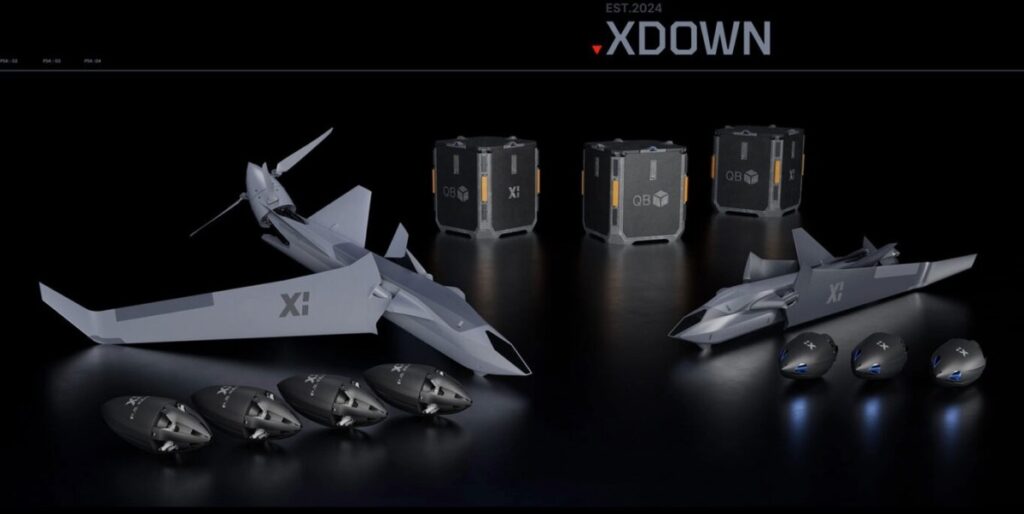
California-based defence technology startup XDOWN has developed the small tactical unmanned drone (STUD), an attritable, backpack-portable system designed to provide frontline infantry with rapid aerial capabilities. Driven by the vision of its founder and chief executive, Alexander Balan, the company aims to replace traditional kinetic magazines with autonomous, low-cost unmanned systems. Balan, a Lafayette College alumnus who studied computer science and mathematics, has stated that the military gear of the future will rely less on rifles and more on compact systems that can be carried in quantity.
The STUD is built for extreme portability and speed. A single operator can carry eight to 12 units in a standard tactical backpack. Its defining feature is a rapid-deployment mechanism: the drone can transition from stowed to active flight in about two seconds. Operators launch the device by throwing it into the air, at which point onboard sensors detect the free-fall and immediately engage the rotors to stabilise the aircraft into controlled flight.
In terms of physical dimensions, the drone measures 44.5cm (17.5in) in length and 8cm (3.1in) in width and depth. It weighs 2.4kg (5.2lb) and can carry payloads of up to 0.77kg (1.7lb). Powered by an electric propulsion system, the STUD boasts a top speed of 165 knots (305km/h), an operational range of 64km (40 miles) and a standard flight endurance of 17 minutes, which can be extended to 25 minutes.
The modular architecture of the platform enables it to perform a variety of mission sets, including intelligence, surveillance and reconnaissance (ISR), electronic warfare, precision strikes and counter-UAS (unmanned aerial system) operations. In its interceptor role, the STUD is particularly aimed at neutralising slower-moving loitering munitions such as the Russian-designed Shahed.
To achieve mass production while maintaining secure supply chains, XDOWN has partnered with the Romanian deep-tech company Qognifly. Qognifly is establishing a manufacturing facility in Bucharest, which is projected to produce between 2,000 and 3,000 units a month by the summer of 2026. The facility will focus on assembling the STUD interceptors and integrating them with Qognifly’s artificial intelligence software, the Air Defense Management System (ADMS), which manages threat detection and autonomous responses within its Drone Wall ecosystem. XDOWN has stated an ultimate goal of scaling production to 6,000 units a month.
This transnational strategy aligns with the US Department of War’s $1.1bn ‘drone dominance’ initiative, championed by the secretary of war, Pete Hegseth. The programme seeks to acquire approximately 340,000 low-cost drones for the US military by January 2028 to counter the mass-production capabilities of adversaries. Although XDOWN did not secure delivery orders in the first phase of the programme’s evaluations, known as Gauntlet I, the company is positioned to compete in subsequent rounds.
Its ability to succeed will depend on proving the reliability of its hand-launch mechanism and meeting strict requirements to exclude Chinese-made components from its supply chain by August 2026.
Related
Discover more from sUAS News
Subscribe to get the latest posts sent to your email.