RAF Regiment Counter-UAS: Defending the Airspace and Turning Threat into Intelligence
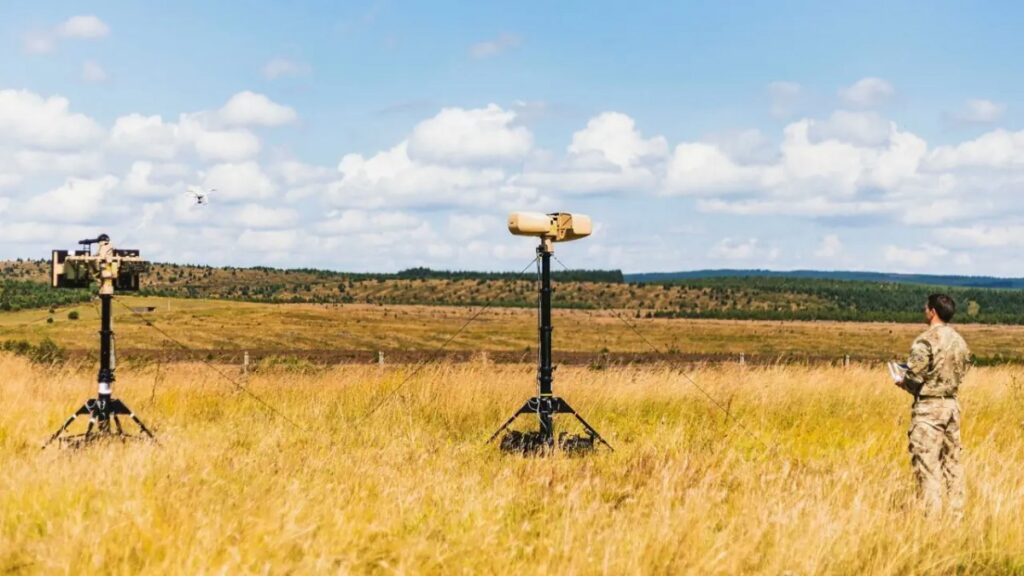
RAF Regiment Counter-UAS: Defending the Airspace and Turning Threat into Intelligence

A modern threat, a measured response. Across the world, the use of small, often commercially derived drones has become a defining feature of modern conflict. Cheap, adaptable and increasingly capable, these systems are used for surveillance, targeting and attack by both state and non-state actors.
In response, the RAF has developed a layered Counter-Unmanned Aerial System (UAS) capability, delivered on the ground by specialist RAF Regiment teams. Their role is clear: detect, track, identify and defeat hostile drones – while exploring opportunities to gather intelligence where possible.
How RAF Regiment Counter-UAS operates
RAF Regiment Counter-UAS capability forms part of a wider UK and coalition air defence system. At its core are systems such as ORCUS, Ninja and Rapid Sentry, designed to address the full spectrum of drone threats.
Detect and track
- Sensors, including radar and radio frequency (RF) systems, are used to detect and track drones operating at low level and often provides the location of the drone operators
- These systems help build a recognised air picture in complex environments
Identify and assess
- Operators analyse signal data, flight behaviour and patterns and visually identify threats using an Ultra Long Range Electro Optical Surveillance System (or Daylight and Thermal Imaging Camera)
- This enables rapid assessment of whether a drone is benign, unknown or hostile
Defeat or disrupt
- A mix of electronic warfare and, where required, kinetic options are used to counter the threat
- Electronic systems can interfere with the communications links used by many drones

Can they take control of drones?
This is where precision matters. RAF information confirms that systems such as Ninja can:
- Interfere with or disrupt control links used by many types of drones
- Take control of the drone providing multiple options including redirecting the drone and even forcing it into a safe landing
This is not guaranteed in every case, and depends on:
- The type of drone
- How it is controlled
- The operating environment
From threat to intelligence opportunity
Where a drone can be safely brought down and recovered intact, it becomes more than a neutralised threat.
Recovered systems may allow:
- Analysis of onboard data and components
- Insight into operating methods and technical capabilities
- Potential understanding of launch points or networks involved
This turns a defensive action into an intelligence advantage – informing future operations and improving force protection.
Operational context: the Middle East
RAF Regiment Counter-UAS teams No. 2 Counter-UAS Wing, have been deployed across the Middle East in support of UK and coalition operations.
Their role includes:
- Protecting personnel, aircraft and infrastructure
- Countering persistent drone threats from hostile actors
- Contributing to a coordinated, coalition-wide air defence effort

Part of a layered defence system
Counter-UAS is one layer within a broader RAF approach:
- Ground-based air defence (RAF Regiment) – countering drones and low-level threats
- Combat air – providing high-end air dominance and response
- ISR and enablers – delivering intelligence, surveillance and operational coordination
Together, these elements create a layered defence system capable of responding across the full spectrum of aerial threats.
RAF Regiment Counter-UAS operations reflect a deliberate shift in modern warfare:
- From simply destroying threats
- To understanding, disrupting and, where possible, exploiting them
Crucially, official RAF language is careful and precise:
- Control of hostile drones is possible in some cases, not all
- Safe landing and recovery is conditional, not routine and the capability to destroy hostile drones using kinetic effects remains if they remain a threat
That realism underpins a capability that is both credible and operationally effective.
Bottom line
RAF Regiment Counter-UAS teams are delivering a critical role in today’s operational environment:
- Protecting UK and allied forces from evolving drone threats
- Denying adversaries freedom of action in the airspace
- And, where conditions allow, turning hostile systems into valuable sources of intelligence
In a battlespace where drones are constant, control – when achievable – becomes a decisive advantage.
Related
Discover more from sUAS News
Subscribe to get the latest posts sent to your email.
Other News in This Category
- For First Responders, Faster Adoption of Small Unmanned Aircraft Systems Means Stronger Physical Security
- Primoco UAV Reports Strongest Q1 in Its History: Robust Performance, New Contracts and Infrastructure Expansion
- Firestorm Labs Announces $82 Million Series B to Accelerate Expeditionary Defense Manufacturing
- DroneShield and Terma Sign Strategic MOU to Advance Layered Counter-UAS Capabilities