Building Agricultural UAV Spraying Before There Was a Playbook
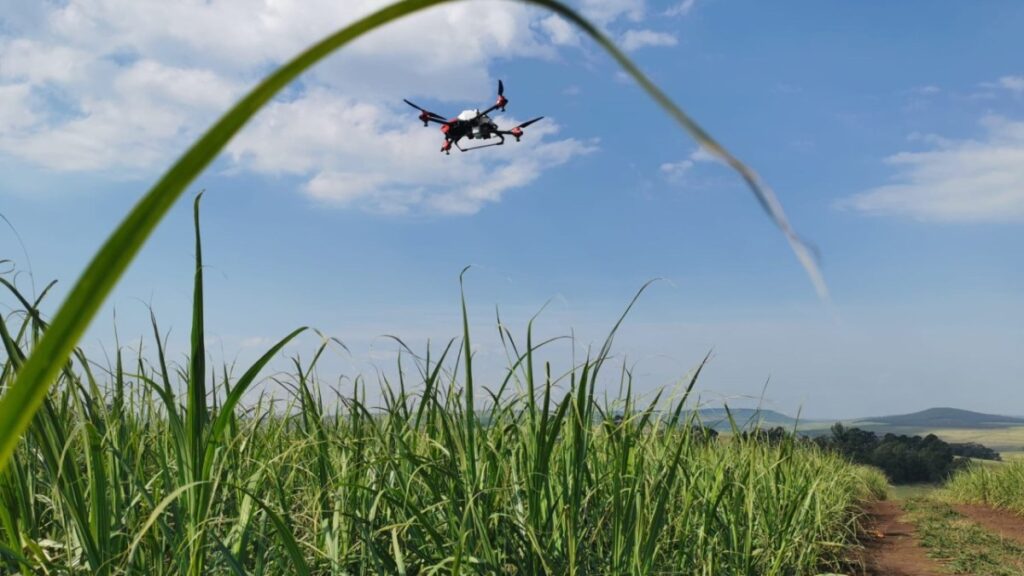
Building Agricultural UAV Spraying Before There Was a Playbook

Today, agricultural drone spraying is becoming part of mainstream agriculture across the world.
Large payload UAVs, RTK positioning, automated terrain following, variable rate application, digital compliance systems, and commercial spray operations are now established parts of the industry.
But less than a decade ago, almost none of this existed in Western agriculture.
Back in 2017, outside China, the idea of using drones for real commercial crop spraying was still viewed with scepticism. Most people associated drones with photography, surveying, or experimental research plots — not serious agricultural application.
At that stage, there was no established Western agricultural UAV industry. No clear operational model. No proven workflows. No training pathways. No real understanding of how these systems would function commercially inside production farming.
That period was the beginning.
And we were part of it.
Coming from a genuine agricultural background rather than purely aviation or technology, I approached UAV spraying differently from the start. My experience in production agriculture, chemical application, pest and disease management, and farm operations meant I understood the practical realities growers faced every day.
To me, the real opportunity was obvious early on.
Agricultural UAVs had the potential to solve problems that conventional application methods often struggled with:
- fragmented fields,
- difficult terrain,
- timing-sensitive applications,
- soil compaction,
- access limitations,
- and operational flexibility.
But turning that potential into practical commercial agriculture was another challenge entirely.
Learning in Real Farming Conditions
Early agricultural UAV spraying was never simply about flying drones.
It was about understanding:
- droplet size,
- canopy penetration,
- environmental conditions,
- low-volume application,
- timing,
- logistics,
- and how aerial application actually performs in real crops.
Those lessons were not learned in demonstrations or marketing videos.
They were learned in real fields on our farm in South Africa.
At the time, China was already moving rapidly ahead through companies like XAG and later DJI, but outside China there were very few operators seriously attempting commercial agricultural UAV spraying in production agriculture.
We were part of that early movement helping bring the technology into practical Western farming operations.
Sugarcane Became One of the First Real Proof Points
One of the defining moments came during early sugarcane ripener work in South Africa.
The work was later referenced in an international article discussing UAV ripener applications in the South African sugar industry. While the aircraft platform used at the time was from XAG, the real significance was never about a specific drone brand. The achievement was proving that agricultural UAV spraying could work commercially in real production agriculture.
From the very beginning, this was something that Leandri Hein and I built and experienced together.
We were both immersed in the reality of an industry that was still finding its feet — long before there was a clear roadmap for commercial agricultural UAV operations. Every day involved problem solving, logistics, field preparation, operational planning, adapting workflows, working with growers, and figuring out how this technology could function practically inside real agricultural systems.
We were not observing the beginning of the industry from the outside. We were operating inside it, not as a theory, not as a future concept, but as real commercial agricultural operations. Together, we demonstrated that UAVs could:
- economically service fragmented cane blocks,
- respond faster than helicopters,
- operate in areas conventional aviation struggled with,
- and still deliver commercially meaningful crop outcomes.
At the time, much of the industry still viewed agricultural drones as experimental technology and still relied heavily on fixed wings and helis
Meanwhile, we were already applying them operationally in production sugarcane.
Before the Industry Matured
Many of the systems now considered normal in agricultural UAV operations simply did not exist yet:
- pilot training structures,
- operational procedures,
- RTK workflows,
- reporting systems,
- compliance pathways,
- and commercial standards were all still evolving.
Much of what became industry best practice came from operators learning directly in the field through practical operations.
That early experience shaped everything that followed for me:
- training agricultural UAV pilots internationally,
- working across multiple aircraft platforms,
- developing operational systems,
- contributing to compliance frameworks,
- and continuing to push UAV technology toward practical agricultural outcomes.
Looking Back
Looking back now, I realise we were witnessing the beginning of a major shift in agricultural aviation.
At the time, it simply felt like solving practical farming problems with new technology.
But those early operations helped demonstrate that agricultural UAVs could become real commercial tools — and today the global industry that has followed is proof of that.
Related
Discover more from sUAS News
Subscribe to get the latest posts sent to your email.