Amazon’s delivery dreams grounded as Texas drone crash sparks fresh safety fears
Amazon’s delivery dreams grounded as Texas drone crash sparks fresh safety fears

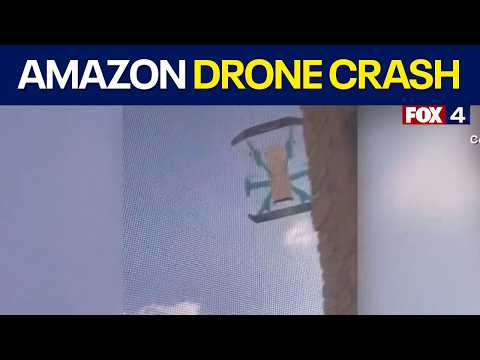
The e-commerce giant’s autonomous future has suffered another high-profile setback after an Amazon Prime Air drone slammed into an apartment building in Richardson, Texas, before plummeting to the pavement in a plume of smoke.
The incident, which occurred at approximately 5:00 pm on 4 February 2026, was captured on video by local resident Cessy Johnson. The footage shows the MK30 hexacopter hovering perilously close to the multi-story complex on Routh Creek Parkway before its propellers struck the facade, sending debris raining down onto a public pavement. While the Richardson Fire Department confirmed that no one was injured, the crash has reignited a fierce debate over the “systemic fragility” of autonomous logistics in densely populated urban environments.
For Amazon, the Richardson collision is more than a mere technical hiccup; it is the latest in a troubling string of operational mishaps. In October 2025, two MK30 drones collided with a construction crane in Tolleson, Arizona, resulting in battery fires. Only a month later, a drone in Waco, Texas, severed an internet cable during its post-delivery ascent, prompting a federal probe.
Technical analysts suggest the root of these failures may lie in the MK30’s design. Unlike its predecessor, the MK27, which utilised physical “squat switches” to confirm ground contact, the MK30 relies almost entirely on an optoelectronic sensor suite comprising LiDAR and computer vision. This shift was intended to reduce weight and complexity, but critics argue it has introduced a “single point of failure”.
LiDAR systems can struggle with low-contrast vertical surfaces like stucco or glass, which may explain why the drone failed to detect the apartment wall in Richardson. Previous testing in Oregon also revealed that the sensors could be confused by light rain or dust, leading the software to abruptly cut power to the motors mid-flight.
The Richardson incident has highlighted the significant “near-miss” risk to the public. An 80lb (36kg) aircraft moving at high energy poses a lethal threat to pedestrians; experts calculate that the probability of fatality for an unprotected person struck by such a falling object is nearly 100 per cent.
Residents in other test markets have expressed growing resentment toward the programme, describing the drones as “incessant” and an “invasion of personal space,” with some comparing the noise to a “giant hive of bees”.
The persistent issues in the United States arrive at a sensitive time for Amazon’s global ambitions. The company has previously announced plans to launch its first UK drone delivery service from a fulfilment centre in Darlington, Durham. However, any wider rollout remains dependent on authorisation from the Civil Aviation Authority (CAA).
As the Federal Aviation Administration (FAA) continues its investigation into the Richardson crash, the e-commerce giant faces a mounting “market for trust”. While Amazon aims to deliver 500 million packages annually by drone by the end of the decade, the sight of a smoking wreckage on a suburban pavement suggests the path to the skies remains fraught with terrestrial dangers
Related
Discover more from sUAS News
Subscribe to get the latest posts sent to your email.