Armed forces bill introduces new powers to counter uncrewed aerial threats
Armed forces bill introduces new powers to counter uncrewed aerial threats

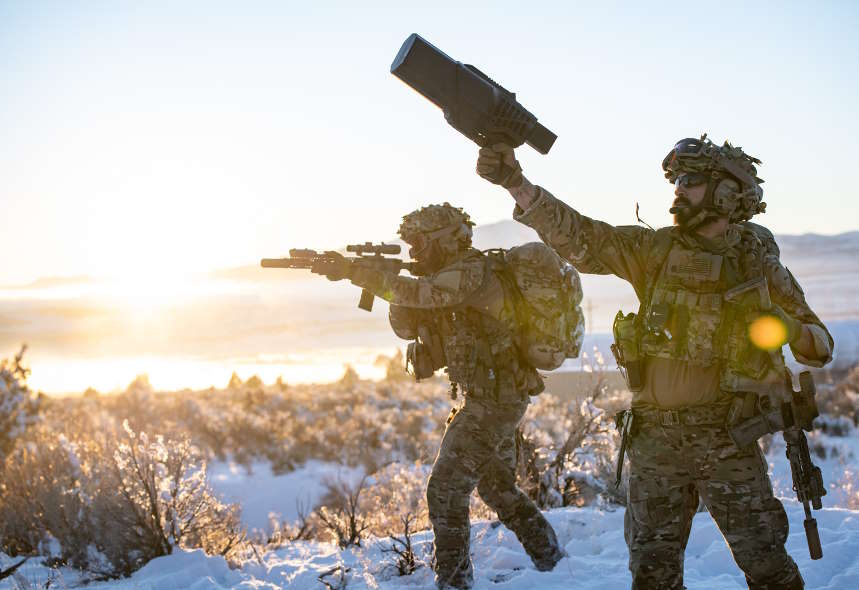
The rapid evolution of uncrewed aerial systems, commonly known as drones, has prompted legislative action to secure military installations and personnel. In response to the unique challenges posed by these technologies, the armed forces bill introduces comprehensive measures to empower the military and the government to counter uncrewed threats effectively. By establishing a robust legal framework for the interference, seizure and retention of uncrewed devices, the legislation marks a significant development in the protection of national security and the safeguarding of defence assets across the UK.

Image Ian Hudson
Defining the threat and the scope of the legislation
At the heart of the new provisions is the definition of an ‘uncrewed device’. The bill describes this as any device operating, or designed to operate, autonomously, or to be controlled remotely without a natural person on board. This broad definition ensures that the legislation covers a wide array of technologies, from commercially available quadcopters to sophisticated military surveillance drones.
The primary objective of these new powers is to allow the use of approved counter-device equipment to prevent or detect the use of an uncrewed device in the commission of a ‘relevant offence’ in relation to a defence area or defence property, or to mitigate the risk of a drone being used in such a manner. The equipment must be explicitly approved by a notice in writing from the secretary of state.
The exhaustive list of relevant offences
The bill meticulously defines what constitutes a ‘relevant offence’, linking the counter-drone measures to some of the most serious security legislation in the UK. Under the National Security Act 2023, these offences include obtaining or disclosing protected information (section 1), assisting a foreign intelligence service (section 3), entering a prohibited place for a purpose prejudicial to the UK (section 4), unauthorised entry to a prohibited place (section 5), sabotage (section 12) and preparatory conduct (section 18), as well as breaching specific orders under sections 6(1) and 11(1) of that act.
Furthermore, the scope encompasses the collection of information under section 58 of the Terrorism Act 2000. Under the Merchant Shipping Act 1995, relevant offences include conduct endangering ships, structures or individuals (section 58) and an owner being liable for the unsafe operation of a ship (section 100(3)). The legislation also extends to the Aviation and Maritime Security Act 1990, specifically offences relating to destroying ships or fixed platforms or endangering their safety under section 11.
Aviation-specific violations under the Air Navigation Order 2016 are prominently featured. These include flying certain unmanned aircraft over or near aerodromes without permission (article 94A), prohibited or restricted flying (article 239(4)), endangering the safety of an aircraft (article 240) and endangering the safety of any person or property (article 241).
Lastly, offences against byelaws made under part 2 of the Military Lands Act 1892, which covers land used for military purposes, and offences under orders in council relating to the Dockyard Ports Regulation Act 1865 are included. To ensure the law can adapt to future threats, the secretary of state retains the power to amend this list of offences by regulations.
Defining defence areas and properties
The powers granted by the bill are geographically bound to the protection of a ‘defence area’ or ‘defence property’. A defence property is defined as any property in the UK used for specific defence purposes. A defence area includes any land (including Crown land) or building in the UK, areas of sea, tidal water or shore to which byelaws apply under the Military Lands Act 1900 or the Land Powers (Defence) Act 1958, and areas of water within a dockyard port regulated by the 1865 act.
The phrase ‘UK defence purposes’ is defined broadly. It covers the activities of His Majesty’s forces; the invention, development, production, operation, storage or disposal of weapons, equipment or capabilities; military planning, defence policy, strategy and intelligence; and plans and measures for the maintenance of essential supplies and services needed by the UK in time of war. Crucially, the provisions also extend to foreign military forces, covering the activities, capability development and weapons management of armed forces from a foreign country or territory allied with or operating within the UK.
The authorisation framework: seniority and oversight
To ensure that these significant powers are not misused, the bill establishes a strict hierarchy for the authorisation of counter-drone equipment. An application for an authorisation can only be made by a person subject to service law, a civilian subject to service discipline, or a member of the civil service working within the Ministry of Defence.
An ‘authorising officer’ must grant the approval. The legislation defines this officer as a senior military figure of at least the rank of rear admiral, major general or air vice-marshal, or a member of the senior civil service of a specified seniority. Before granting an authorisation, this officer must believe that an uncrewed device has been, or is being, used to commit a relevant offence, or that there is a risk of it being so used. Crucially, the authorising officer must also believe that granting the authorisation is appropriate in the interests of national security.
Authorisations must generally be given in writing. They must specify the particular defence area, defence property or description of property where the equipment will be used. They must also state the period for which the authorisation is valid, which cannot exceed 12 months from the day it takes effect. An authorisation may be given generally for approved equipment or limited to specific descriptions of equipment.
Moreover, the authorisation must specify the required seniority of the ‘responsible person’ who will oversee the operation on the ground. This responsible person must be a member of the armed forces of at least the rank of lieutenant commander, major or squadron leader, or a suitably senior civil servant. The approved equipment may only be used if this responsible person is satisfied that it will be used strictly in accordance with the authorisation, and that its use is both necessary and proportionate for the stated purposes.
Fast-track protocols for urgent threats
Recognising that threats to national security can emerge rapidly and without warning, the bill provides a fast-track procedure for situations requiring urgent consideration. If it is not reasonably practicable for a standard authorising officer to consider an application, the power to grant an authorisation can be exercised by a ‘designated person’.
A designated person must be a military officer of at least the rank of commodore, brigadier or air commodore, or a specified member of the senior civil service. In these urgent scenarios, the authorisation may be given orally, bypassing the standard written requirement, but it will only remain valid for a maximum of 72 hours.
If the threat persists, these urgent authorisations can be renewed. A designated person can renew an urgent authorisation on one occasion only for a further period of up to 72 hours. Alternatively, a standard authorising officer can step in to renew the authorisation for up to 12 months. This tiered approach ensures that frontline personnel have the immediate operational flexibility they need, while maintaining strict long-term executive oversight. Authorisations can also be varied or revoked by an authorising officer at any time.
The scope of interference and lawfulness of action
When a valid authorisation is in place, the military is granted significant powers to neutralise the threat. Any action taken is considered lawful for all purposes, provided it is authorised by the framework. This includes interfering with an uncrewed device at any place in the UK, as well as in, above, or below the adjacent territorial sea.
Interference explicitly includes the seizure and retention of the drone. However, the military is not intended to hold civilian property indefinitely. If a device is seized and retained, and not immediately returned to its owner or another appropriate person, it must be delivered to a civilian police constable within 72 hours of its seizure. If the drone was captured at sea, this 72-hour window begins when the device first reaches land in the UK.
Once the device is in the possession of the police, existing civilian laws regarding recovered property apply. These include the Police (Property) Act 1897 in England and Wales, part 6 of the Civic Government (Scotland) Act 1982 in Scotland (disregarding references to the finder of the property), and section 31 of the Police (Northern Ireland) Act 1998.
It is important to note that while the powers of interference are broad, they are not absolute. The bill explicitly states that nothing in this new part authorises the taking of any action that is prohibited by parts 1 to 7, or chapter 1 of part 9, of the Investigatory Powers Act 2016, thereby preserving existing legal safeguards against unlawful surveillance and the interception of communications.
Preparedness: testing and training
A crucial component of effective defence is the ability to operate complex counter-drone technology safely and efficiently. To this end, the bill allows authorisations to be granted specifically for testing or training activities, either in addition to or instead of active operational purposes.
Testing activities include the testing, maintenance or development of the approved counter-device equipment. Training activities involve training personnel to use the equipment for the purpose of preventing or detecting drone-related offences. Crucially, the stringent requirement that an authorising officer must believe a relevant offence is actively occurring, or at risk of occurring, does not apply to authorisations granted solely for testing and training. Furthermore, the legislation ensures that no criminal liability is incurred in respect of any action taken so far as it is authorised for these training and testing activities.
Conclusion
The armed forces bill represents a highly structured modernisation of the military’s legal toolkit. By formalising the definition of uncrewed devices, exhaustively listing relevant security offences, and detailing the exact ranks and procedures required to authorise interference, the government is attempting to strike a careful balance. The legislation provides the armed forces with the agility to respond to immediate aerial threats through 72-hour oral authorisations, while ensuring long-term deployments of counter-drone technologies are subject to rigorous oversight by senior military and civil service officials. As uncrewed technology continues to proliferate, these precise powers will be essential to safeguarding the UK’s defence infrastructure.
Related
Discover more from sUAS News
Subscribe to get the latest posts sent to your email.
Other News in This Category
- FLUX GmbH Releases Whitepaper on Precision Position Feedback for Aiming and Tracking Systems in Defense Applications
- Online Oceans Raises £4 Million to Scale Autonomous Surface Fleets for Defence and Maritime Security
- Eurovision 2026 Opens With Europe’s Largest Drone Show
- Strong Partnership for Aviation: Knuerr, Voxtronic and IHSE present Integrated Control Room Solutions at Airspace World