Birdstop and TSPS Launch Drone-Monitoring for Trucking Operations in Detroit
Birdstop and TSPS Launch Drone-Monitoring for Trucking Operations in Detroit

Birdstop’s new flagship product, Fealty, is delivering real-time visibility in the nation’s busiest commercial trucking hub at the U.S.-Canada border.
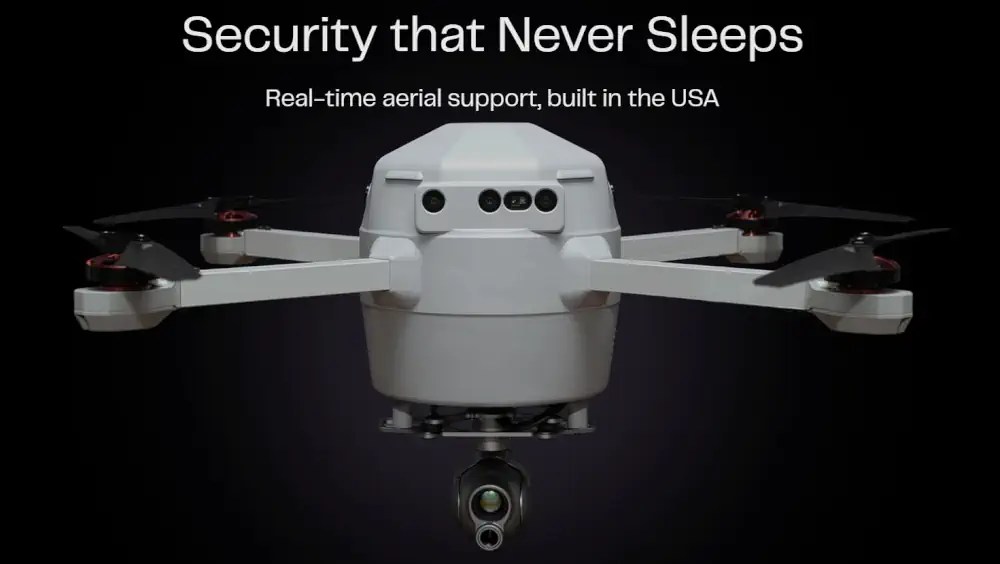
Birdstop, a leader in autonomous American-made drones used for 24/7 monitoring, today announced that it has begun monitoring the first of many trucking sites in Detroit using AI-powered drone technology. The need for more efficiency within the sector is vast, with the U.S. trucking industry moving roughly 73% of the nation’s freight by weight and generating more than $900 billion in annual revenue. The initiative is being carried out in partnership with TSPS, Inc., a Detroit-based expert in truck parking and lot management to bring together complementary capabilities in securing transportation networks. By combining Birdstop’s drone-based sensing with TSPS’s real-time parking platform, the project delivers real-time intel for persistent challenges across U.S. freight corridors—helping reduce search times and improve safety.
“America runs on the trucking system,” said Keith Miao, Founder and CEO of Birdstop. “Working with TSPS, we’re using autonomous drone technology to help secure and modernize the network that moves billions of dollars in goods every day.”
A New Approach to a National Challenge
Truck parking shortages remain a persistent challenge across the U.S., contributing to driver fatigue, inefficiencies, and safety risks across freight corridors. The issue impacts an industry that employs more than 8.4 million people in trucking-related jobs, including approximately 3.5 million professional drivers responsible for moving the majority of the nation’s freight. Many rural and high-traffic routes lack consistent visibility into available parking, limiting drivers’ ability to plan safe stops.
“We are constantly looking for more scalable and cost-effective ways to gain visibility across America’s parking facilities, especially in areas where traditional fixed-sensor systems are not practical,” said Carl Rundell, CEO of TSPS. “Partnering with Birdstop allows us to extend coverage using a flexible, drone-based approach that delivers real-time operational insight across the entire freight network.”
Birdstop has deployed drone systems at two Oasis Parking locations in Detroit monitored by TSPS. The system captures aerial imagery and telemetry data, which is processed using AI and computer vision models to detect trucks and identify available parking spaces. These insights are integrated into a visualization platform developed in partnership with TSPS and made available to end users through the TSPS platform, providing real-time parking availability at these locations.
Building Toward Scalable, National Impact
This initial deployment represents the first phase of Birdstop’s broader effort to validate and scale drone-based infrastructure monitoring across the U.S. Birdstop’s long-term vision is a constellation of drones providing continuous infrastructure monitoring across national transportation networks. Within this framework, TSPS’s role in deploying and managing truck parking facilities along major freight corridors makes it a natural first application of the system.
The project will evaluate system performance, operational feasibility, and cost advantages compared to traditional fixed-sensor approaches. By demonstrating a more flexible and scalable model for infrastructure monitoring, the same drone network can support future applications across state transportation systems, including infrastructure maintenance, emergency response, and other roadway operations—while helping reduce time spent searching for parking and improving freight efficiency.
Funded through the Michigan Mobility Funding Platform and administered by NextEnergy in partnership with Michigan’s Office of Future Mobility and Electrification, this project showcases how Michigan is deploying emerging technologies. With some of the heaviest truck traffic in the nation and longstanding air quality challenges tied to freight movement, Detroit provides a critical real-world testbed for deploying innovative solutions that improve safety, efficiency, and environmental outcomes.
“Projects like this demonstrate how Michigan is leading by putting advanced mobility technologies to work in the real world,” said Jim Saber, President and CEO of NextEnergy. “As the program manager for the Michigan Mobility Funding Platform, NextEnergy helps evaluate, fund, and support projects like this—bringing together partners like Birdstop and TSPS to deploy and scale solutions that strengthen safe, efficient transportation systems.”
“Michigan is positioning itself as the nation’s frontrunner in advanced air mobility through world‑class testing assets, smart infrastructure, exceptional talent, robust manufacturing expertise, and strategically coordinated statewide partnerships that accelerate safe and scalable innovation,” said Justine Johnson, Michigan’s Chief Mobility Officer. “Birdstop’s project is a key step in demonstrating how drones can safely improve the environmental footprint while enhancing the safety of freight operations for everyday Michiganders.”
Together, these organizations are positioning Detroit as a hub for next-generation intelligent transportation systems, with this pilot serving as a key example of how public-private partnerships can accelerate real-world deployment.
Related
Discover more from sUAS News
Subscribe to get the latest posts sent to your email.
Other News in This Category
- Grilling Greg: Your Toughest Drone Registration, Airspace, and Part 107 Questions Answered
- An-28 Skydiving Plane Has 222 Drone Kills. The New York Times Just Filmed Inside It.
- NASA Picks Pierce Aerospace for Bay Area Remote ID Sensor Network
- Laminar-Flow Drone From Otto Aerospace Clears Flight-Test Campaign for DARPA