Funding led by NATO Innovation Fund supports growth in defense, AI, and dual-use applications
Kelluu, a Finnish deep tech company, has raised €15 million in Series A funding to expand its autonomous airship platform and scale international operations. The round was led by the NATO Innovation Fund, marking its first investment in a Finnish company.
The funding will support technology development, AI capabilities, fleet expansion, and team growth. Kelluu also plans to enter new markets this year.
The company operates a fleet of hydrogen-powered, unmanned airships designed for persistent aerial monitoring. These systems provide continuous intelligence, surveillance, and reconnaissance across large areas.

Addressing Gaps in Aerial Intelligence
Kelluu positions its platform between satellites and drones. Satellites offer wide coverage but lack detail. Drones provide high-resolution data but cannot stay airborne for long periods.
Kelluu’s airships aim to bridge this gap. They can operate for more than 12 hours and deliver real-time imagery across wide areas. Five airships can cover up to 30,000 square kilometers from a single base.
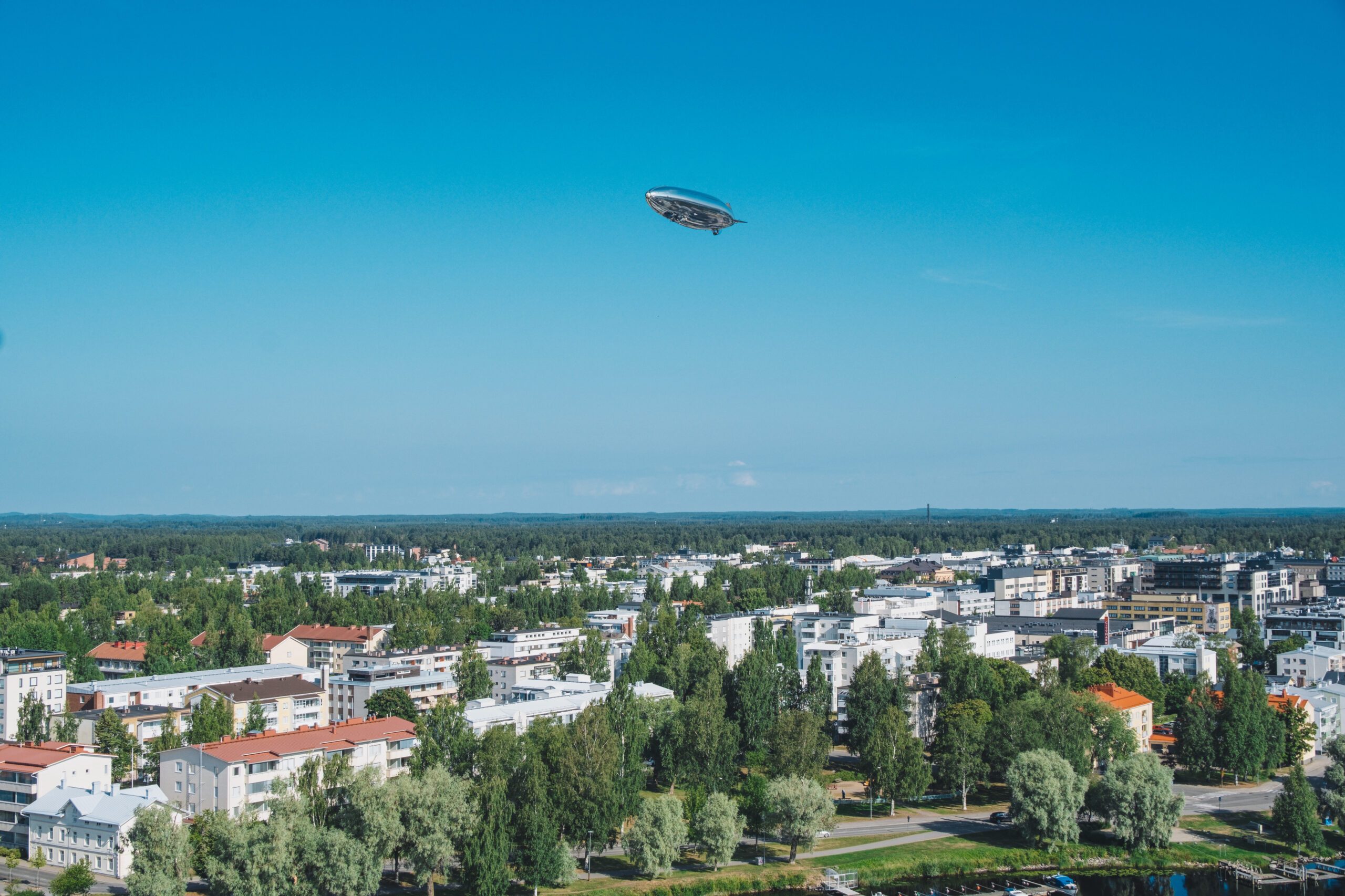
The systems are designed to function in harsh conditions. They can operate in extreme cold, resist GPS jamming, and maintain performance in complex airspace.
Kelluu CEO Janne Hietala said: “We built Kelluu at the edge of Europe, in one of the hardest operating environments outside conflict zones, because we believe that persistent aerial intelligence would become critical infrastructure – not just for defence, but for the resilience of entire countries. That moment has arrived faster than anyone expected. Raising this funding crystalises an abundance of opportunities: the investment gives Kelluu a clear runway to further optimise our technology while continuing to scale the company and deliver constant operational excellence. The same platform that strengthens NATO’s Eastern Flank protects power grids, detects wildfires, and feeds the world foundation models that will define the next generation of physical AI. That’s not two separate missions – it’s one fleet, one data layer, building resilience across everything it covers.”
NATO Investment and Strategic Context
The NATO Innovation Fund’s participation reflects growing demand for persistent ISR capabilities. European defense planners are focusing on closing surveillance gaps, especially in regions like the Eastern Flank and the Arctic.
NATO Innovation Fund Partner Patrick Schneider-Sikorsky said: “Kelluu offers NATO nations persistent, wide-area monitoring and data gathering in challenging environments. Their platform provides consistent coverage even when GPS is jammed or weather is harsh – at much lower cost than traditional systems – opening up new possibilities for aerial intelligence. We are pleased to be backing a company that has built a technology – with support from NATO’s DIANA – that strengthens the Alliance’s deterrence posture, situational awareness, and resilience.”
Kelluu has participated in NATO’s DIANA program since 2024. The company has also completed field testing with NATO forces and participated in multi-national exercises.
Proven Performance in Harsh Conditions
Kelluu’s airships are designed for endurance and resilience. They operate at temperatures as low as -33°C and can function during sustained GNSS jamming.
The fleet has logged more than 50,000 kilometers of flight. Missions have included 12-hour operations in Arctic conditions.
Recent demonstrations include integration with NATO systems. During Exercise Steadfast Dart 26, Kelluu delivered real-time video and geolocation data to allied forces.
Giuseppe Lacerenza, Partner at Keen Venture Partners, said: “The gap between what needs to be watched and what existing platforms can actually watch is widening. Satellites revisit too infrequently, lack resolution, or struggle under cloud cover. Drones lack endurance, and fail in extreme cold. Manned aircraft are prohibitively expensive to keep persistent. There is no shortage of balloon platforms claiming to fill this void, but none operate where Kelluu operates or under the conditions it has proven itself in. This team was forged on one of Europe’s most exposed borders, backed by leadership that has built and scaled before. It shows in the product and in how the company is run. We are proud to be part of this chapter.”
Dual-Use Applications Beyond Defense
While defense is a key focus, Kelluu’s platform also supports civilian use cases. These include infrastructure monitoring, wildfire detection, forestry analysis, and smart city applications.
The system can generate high-resolution digital twins and provide cost advantages over manned aviation.

Kelluu Board Chair Tero Vauraste said: “On behalf of Kelluu’s clients, owners and the staff, the board wishes to express its sincerest gratitude to the investors during this time where innovative services make a difference for a secure future.”
Building an AI-Driven Data Platform
Kelluu is also investing in AI through its Kelluu AI Labs initiative. The company aims to build large-scale models of the physical world using data collected by its airships.
Hietala said: “Kelluu AI Labs will accelerate the race to complete world models – one of the defining AI challenges of our time. Lack of data is the bottleneck and we resolve this: our platform is a proprietary data flywheel where every flight hour, every sensor pass, and every environmental observation compounds into datasets that are hard to replicate.”
These models could support defense, infrastructure, and environmental monitoring. They may enable predictive insights, such as identifying risks before failures occur.
A Growing Role in Europe’s Security Landscape
Kelluu’s funding comes at a time of increased focus on resilience and situational awareness. Governments and agencies are seeking systems that can provide continuous coverage across large and remote areas.
By combining endurance, sensing, and AI, Kelluu aims to build a persistent aerial intelligence layer. The company’s approach reflects a broader shift toward always-on monitoring as a form of critical infrastructure.
As the company expands, its platform may play a growing role in both defense operations and civilian applications across Europe and beyond.

Miriam McNabb is the Editor-in-Chief of DRONELIFE and CEO of JobForDrones, a professional drone services marketplace, and a fascinated observer of the emerging drone industry and the regulatory environment for drones. Miriam has penned over 3,000 articles focused on the commercial drone space and is an international speaker and recognized figure in the industry. Miriam has a degree from the University of Chicago and over 20 years of experience in high tech sales and marketing for new technologies.
For drone industry consulting or writing, Email Miriam.
TWITTER:@spaldingbarker
Subscribe to DroneLife here.