Dubai is Burning: Why Russian Drone Proxies are Fleeing the Gulf for a Gullible Europe
Dubai is Burning: Why Russian Drone Proxies are Fleeing the Gulf for a Gullible Europe

Following the outbreak of the US-Israel-Iran war in February 2026, the United Arab Emirates has lost its safe haven status. Missiles and drones have directly hit civilian infrastructure in Dubai and Abu Dhabi, including the Fairmont hotel and Amazon Web Services data centres.
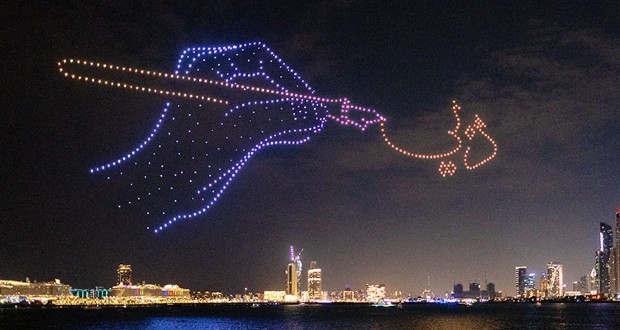
For Russian drone light show companies, the situation is a bitter irony. After the 2022 invasion of Ukraine, wealthy Russians and tech businesses flocked to the UAE to avoid Western sanctions. Russian-linked companies established themselves in Dubai’s free trade zones, utilizing opaque ownership rules to exploit the entertainment market and quietly procure restricted technology. Now, with the Persian Gulf actively under fire, these companies are packing up and looking to relocate to the European Union.
Word is that some of these operators are trying to ‘Trojan horse’ their way into Europe by sneaking into or acquiring other companies. It is understood that certain light show operators source their swappable lithium batteries from sister companies back in Russia—and those exact same batteries are currently powering drones on the frontline in Ukraine. It is decidedly not cool if these components and supply chains get embedded in Europe.
We have strict rules about doing business with Russian companies, but is setting up in the UAE and hiding their roots a viable strategy for them? Historically, yes. Dubai’s free trade zones offer limited transparency on ownership, making it incredibly easy for firms to mask their Russian origins through shell companies, family members, and intermediaries. Much of the bureaucratic self-congratulation over early sanctions was simply BS and nest feathering by regulators who thought paper clauses would stop illicit trade. The reality is that the modern drone grift is alive and well.
However, I reckon the authorities are finally waking up, even if they have previously been utterly incompetent at understanding dual-use tech. To combat this exact Trojan horse strategy, the EU’s 19th sanctions package specifically introduced strict, binding legal definitions for “ownership” and “control”. If an entity is practically controlled by a sanctioned Russian actor—even through opaque offshore arrangements or UAE shell companies—it now falls under EU asset-freezing obligations. The EU has also mandated a “No Russia Clause” in contracts to prevent the re-export of sensitive goods to Russia.
Despite these new rules, the West is still, in my view, on the back foot. A company capable of synchronising 5,000 to 10,000 drones for a light show possesses the exact technical architecture required for network-centric military swarms. Meanwhile, back in Russia, the Alabuga Special Economic Zone is mass-producing kamikaze drones. The underlying software, microelectronics, and swarm coordination needed to control these weapons overlap significantly with commercial light show technology.
If European agencies don’t rigorously vet these relocating companies and their complex ownership webs, this civilian tech can easily be repurposed for the battlefield. While corporate PR teams might dismiss these security concerns as a complete nothing burger, the threat of dual-use swarm technology and Russian-made batteries slipping through Europe’s regulatory net is very real. It is time to call out the managers and regulators who are turning a blind eye to these strategic risks.
Related
Discover more from sUAS News
Subscribe to get the latest posts sent to your email.
Other News in This Category
- Inside the Future of Drones: Policy, Security with Michael Robbins, CEO and President of AUVSI on the Drone Radio Show
- AVSS collaborates with the Government of Canada through Innovative Solutions Canada to perform avalanche control work with drones
- 218 Wildfire Drone Incursions Last Year, Most Ever Recorded
- Singapore Bets on Drone Boxes for Island-Wide Public Safety