Echoes of Agusta: How a €50m Drone Panic Sparked Belgium’s Latest Defence Crisis
Echoes of Agusta: How a €50m Drone Panic Sparked Belgium’s Latest Defence Crisis

The Brussels public prosecutor’s office has today, 17 April 2026, launched a formal investigation into the Belgian defence ministry’s acquisition of anti-drone equipment. The inquiry, which will examine potential official corruption and the obstruction of public auctions, was triggered by a broadcast from the investigative television programme Pano. The documentary scrutinised a €50m emergency procurement of counter-UAS (unmanned aerial systems) technology ordered by the defence minister, Theo Francken.
To understand the current crisis, one must look back to the wave of unexplained drone sightings that swept Belgium between September 2025 and January 2026. The National Crisis Centre recorded 558 reports of suspicious drones, which forced temporary closures at Brussels and Liège airports and targeted sensitive sites, including the Doel nuclear power plant and the Kleine-Brogel airbase. At the time, Francken described the incursions as a hybrid warfare tactic, heavily implying Russian state involvement and coordinated espionage.
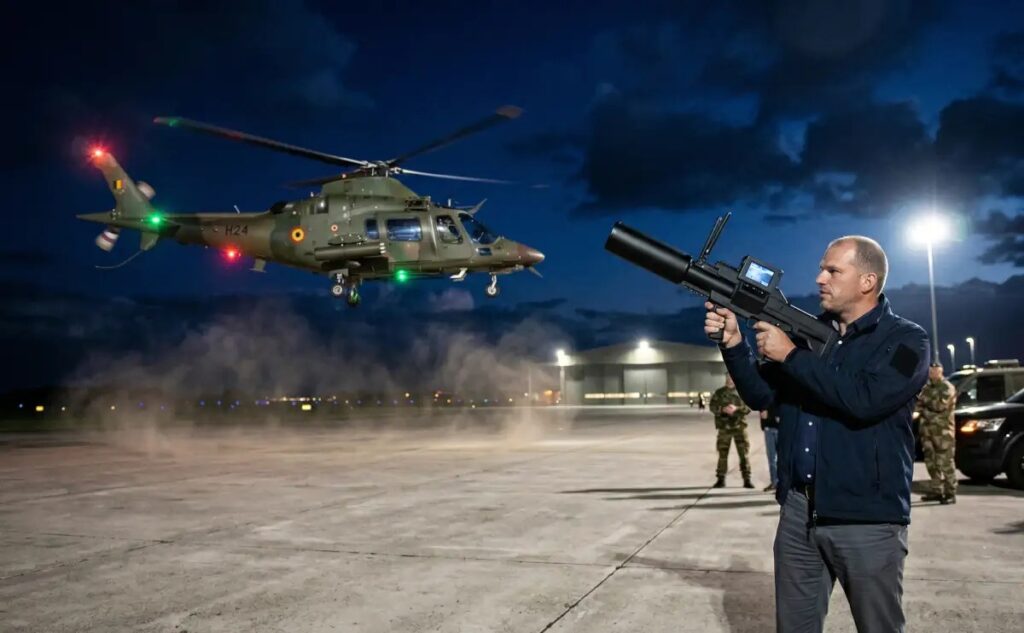
However, the Pano investigation revealed a starkly different reality: there remains no confirmed evidence of hostile state drones operating over Belgium. In one embarrassingly publicised instance, a “large drone” over Brussels Airport—footage of which was shared by Francken himself—turned out to be a police helicopter. Fueled by this exaggerated threat narrative, the defence ministry bypassed standard public tender processes to fast-track the €50m acquisition of detection and jamming systems. According to the report, critical advice from the Inspectorate of Finance was ignored, and equipment such as Senhive detection antennas was purchased at heavily inflated prices.
The financial scale of this un-tendered allocation easily outstrips Belgium’s largest military purchase scandal to date: the notorious Agusta-Dassault affair, or Agustaschandaal. During the late 1980s, the Italian firm Agusta and the French company Dassault paid over 160m Belgian francs—approximately €4m—in bribes to secure contracts for A109 helicopters and F-16 electronic warfare upgrades. That scandal profoundly reshaped the Belgian state, leading to the resignations of several senior ministers and the then NATO secretary general, Willy Claes, as well as an overhaul of party financing laws. While the Agusta affair involved explicit bribery to political parties, the sheer volume of public funds committed without competitive bidding in Francken’s CUAS procurement raises similarly profound questions about institutional oversight and governance.
Following the announcement of the investigation today, Francken expressed satisfaction with the prosecutor’s involvement, arguing it would definitively refute any hints of bias. He maintains that the legal procedure was followed correctly and has ordered an independent federal internal audit into the procurement process.
Meanwhile, Conner Rousseau, the leader of the Vooruit party, noted that while there is no political crisis just yet, the controversy leaves a damaging impression of incompetence. Rousseau emphasised the need for transparency and honesty from the government, warning against unnecessarily scaring a public that is already anxious about global conflicts.
Related
Discover more from sUAS News
Subscribe to get the latest posts sent to your email.