Hiding in plain sight: the biomimetic drone patrolling our coastlines in the guise of a seagull
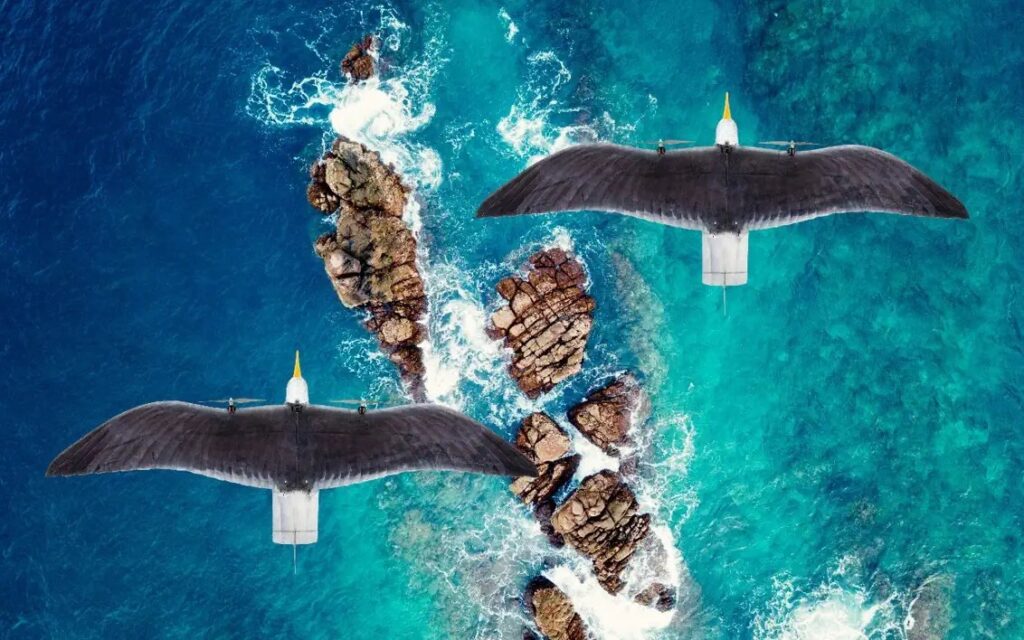
Hiding in plain sight: the biomimetic drone patrolling our coastlines in the guise of a seagull

The ubiquitous seagull, long considered a mere coastal nuisance, has been reimagined as the future of maritime surveillance. Developed by the pioneering Dutch company Guard From Above, the Seagull Evo is an unarmed, fixed-wing reconnaissance drone designed to mimic the exact silhouette and flight behaviour of a natural seagull.
Crafted with direct input from military end-users, this biomimetic aircraft offers unparalleled discretion for operations near ports, harbours, and shorelines where conventional quadcopters would instantly attract unwanted attention.
The lightweight system, weighing less than 1.5 kilograms and capable of being assembled and launched by hand in under three minutes, provides an immediate tactical advantage by simply hiding in plain sight. Equipped with electro-optical or infrared cameras for day and night observation, the drone boasts a 59-minute flight time and can silently ride thermal updrafts exactly like its avian counterpart, further reducing its acoustic and visual signature during missions.
While traditional military intelligence assets like the AeroVironment Puma or Delair UX11 offer greater payload capacities and extended communication ranges, the Seagull Evo occupies a highly specialised niche in gray-zone monitoring and close coastal reconnaissance.
Rather than dominating the skies with brigade-deep surveillance, it allows coast guards, border security teams, and marine infantry to discreetly observe suspected landing sites, smuggling routes, or offshore infrastructure from austere locations.
The drone’s reliance on visual disguise makes it particularly valuable in littoral environments across Europe, North America, Asia, and Africa where gulls naturally dominate the airspace as visual clutter. However, to prevent these innovative defence initiatives from stalling or becoming costly failures due to operational errors, Guard From Above has recognised that success fundamentally relies upon skilled operators and proper maintenance.
Acknowledging that security teams frequently underestimate the complex skills required for safe drone deployment, the company has structured a comprehensive three-step training programme to build operator competence from the ground up.
Trainees first master the fundamentals of flight through immersive simulator sessions using commercial Realflight Evolution software on a standard laptop.
Once confident in this risk-free virtual environment, operators progress to the second step, transitioning to the physical world with guided hands-on practice using affordable Easystar 3 remote-controlled planes to perfect take-offs, landings, and advanced manoeuvres under expert supervision. In the final phase, trainees take control of the professional-grade drone itself, whilst simultaneously learning crucial field maintenance, routine component checks, and troubleshooting techniques to ensure their biomimetic fleet remains reliable and ready for immediate action
Related
Discover more from sUAS News
Subscribe to get the latest posts sent to your email.