Lasers, balloons and broken protocols: how the battle for the skies is endangering the public
Lasers, balloons and broken protocols: how the battle for the skies is endangering the public

From the deserts of Texas to the rooftops of London, aviation regulators are locked in a power struggle with security agencies rushing to deploy unproven technology in civilian airspace.
The warning from the Federal Aviation Administration (FAA) was stark and unprecedented: a ten-day closure of the airspace over El Paso, Texas, designated as “National Defense Airspace”, with the ominous caveat that deadly force could be authorised against non-compliant aircraft. For seven hours on Wednesday, a major American city was effectively a no-fly zone, stranding travellers and diverting medical evacuations.
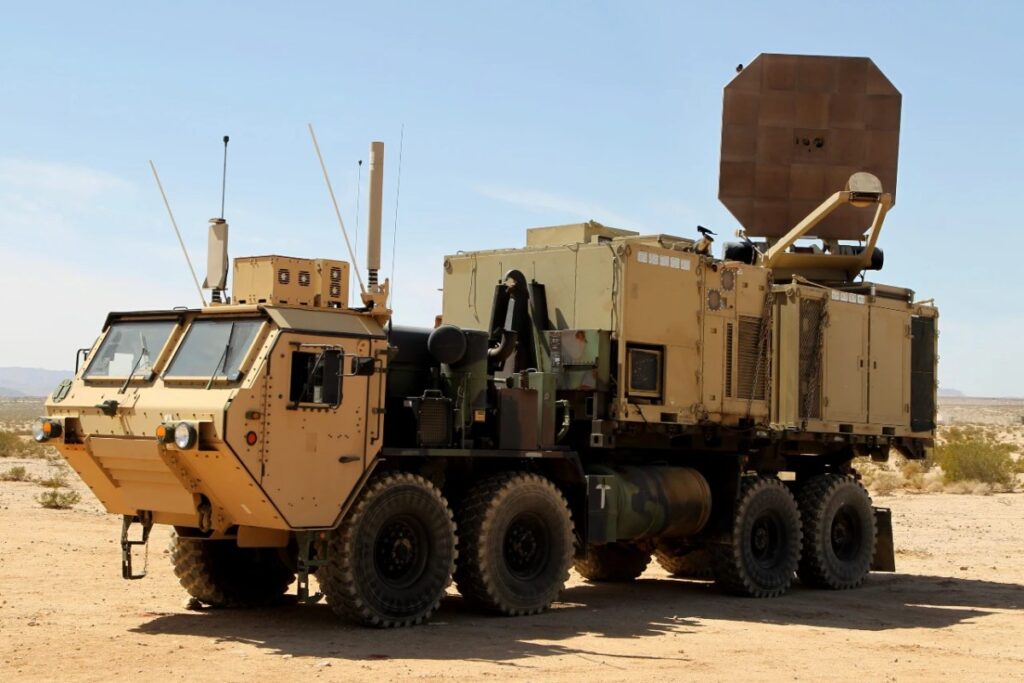
The cause of this chaos was not a terrorist plot or a foreign invasion, but a breakdown in communication between the aviation regulator and the newly emboldened Department of War. Pentagon officials, eager to test a high-energy laser weapon against cartel drones, had reportedly fired upon a target that turned out to be a Mylar party balloon.
This farce in the American south-west mirrors a quieter, yet equally troubling conflict brewing in the UK. As police forces rush to roll out autonomous “Drones as First Responder” (DFR) programmes, the Civil Aviation Authority (CAA) finds itself grappling with a “state aircraft” loophole that allows law enforcement to bypass standard safety regulations. In both nations, the mandate to keep the skies safe for all is colliding with the operational impatience of security agencies, leaving the public caught in the crossfire.
In the US, the friction has been exacerbated by the Trump administration’s aggressive rebranding of the Department of Defense to the “Department of War”, a shift intended to signal “maximum lethality” and a departure from “tepid legality”. This doctrinal pivot appears to have trickled down to operational protocols.
According to sources familiar with the El Paso incident, the Pentagon sought to test directed-energy weapons near Fort Bliss, which abuts the city’s international airport, without fully coordinating with the FAA. When the military proceeded to engage a target—misidentifying a party balloon as a cartel drone—the FAA’s administrator, Bryan Bedford, unilaterally closed the airspace to ensure civilian safety until the Department of War could guarantee its lasers wouldn’t blind pilots or down airliners.
The incident highlights the dangers of deploying experimental military hardware in domestic airspace. While the administration claimed to have neutralized a “cartel drone incursion”, the reality—a laser shot down a child’s party balloon —suggests a worrying gap in the sensor technology used to justify such kinetic action.
Across the Atlantic, the tension is less explosive but arguably more systemic. The National Police Chiefs’ Council (NPCC) is aggressively pursuing a vision where autonomous drones, launched from “boxes” on rooftops, arrive at crime scenes within minutes. To facilitate this, police drones are often classified as “state aircraft”, a status that exempts them from the stringent regulations that govern commercial operators.
This “third way” regulatory path has led to a transparency crisis. An investigation by sUAS News revealed that the NPCC holds no centralised safety repository for these operations. Instead, critical flight logs and risk assessments are “scattered across personal drives” and staff mailboxes, making public scrutiny impossible. When pressed for safety cases regarding Beyond Visual Line of Sight (BVLOS) trials, the NPCC refused disclosure, citing the costs of searching through disjointed files.
The consequences of this opacity are already being felt. On 2 August 2025, a police drone operating on the Isle of Sheppey struck an overhead cable and fell, injuring a child. While the Air Accidents Investigation Branch (AAIB) launched an inquiry, the CAA admitted it held no specific guidance for investigating state aircraft incidents, exposing a regulatory blind spot.
The friction between regulators and enforcers is fundamentally a clash of cultures. The FAA and CAA operate on a “just culture” model, where safety is paramount and reporting errors is non-punitive to encourage transparency. Security agencies, driven by tactical necessity and political pressure, often view these protocols as bureaucratic hurdles.
In the UK, the push for BVLOS trials has led to the creation of Temporary Danger Areas (TDAs), such as the one recently imposed over Islington, London. These zones effectively segregate airspace for police use, displacing commercial and recreational users and drawing accusations of a land-grab in the sky. Critics argue that the technology to safely integrate these drones does not yet exist, forcing regulators to rely on segregation rather than integration.
Meanwhile, the US military’s unilateral actions in El Paso suggest a dangerous precedent where “national security” is used to override civilian safety protocols. As General Glen VanHerck of US Northern Command noted during the 2023 Chinese balloon incident, detecting small airborne objects remains a “domain awareness gap”. Filling that gap with high-energy lasers in populated areas, without the consent of the aviation regulator, invites disaster.
As the skies become more crowded with autonomous machines and the weapons designed to counter them, the role of the regulator has never been more vital. The shoot-down of a party balloon in Texas and the injury of a child in Kent serve as warnings: when the urge to deploy new technology outpaces the safeguards designed to control it, gravity ensures that the public pays the price.
Related
Discover more from sUAS News
Subscribe to get the latest posts sent to your email.