Picogrid Awarded Contract to Streamline XVIII Airborne Corps Battlefield Integration
Picogrid Awarded Contract to Streamline XVIII Airborne Corps Battlefield Integration

FORT BRAGG, N.C., Picogrid today announced a contract to support the XVIII Airborne Corps as it advances the Army’s modernization efforts, enabling more flexible, integrated use of battlefield systems. Through this work, Picogrid will allow units to rapidly integrate new battlefield systems faster in the field, with a focus on counter-unmanned aerial systems.
The contract is centered on a broader operational challenge facing the Army: as more sensors, autonomous systems, and software from various vendors enter the field, the Army needs a practical way to make these siloed systems work together without long integration timelines or custom engineering for every new capability.
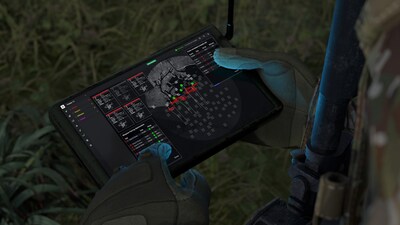
Under the contract, Picogrid will deploy Legion and Expeditionary Command and Control Nodes to directly address this challenge. Together, these solutions will integrate disparate sensors, response systems, and mission software into a shared operational picture, even in environments where connectivity is limited. This work will support rapid onboarding of new technologies, data sharing across different networks, coordination across multiple systems, and continued experimentation with forward-deployed units.
The effort supports work through the Army’s Joint Innovation Outpost, or JIOP, which focuses on moving new capabilities into operational use quickly. For XVIII Airborne Corps, that need is especially acute. As the Army’s global response force, the unit is ready to deploy anywhere in the world on short notice and operates in conditions where systems need to work together immediately.
The award builds on Picogrid’s work supporting prior Army exercises, including Scarlet Dragon at Fort Bragg, where Picogrid orchestrated multiple sensor systems with supported detection, tracking, and sensor-to-sensor cueing workflows. These efforts demonstrated how units can integrate data from multiple systems and coordinate follow-on actions.
“As the Army fields more sensors, autonomous systems, and software, the bottleneck is no longer access to technology. It’s getting those systems to work together fast enough to matter,” said Jake Jeffries, Head of Deployments, Picogrid. “This effort is about giving units a common foundation they can use to bring new capabilities online in weeks, not months, while still working with the systems they already have.”
“For a formation that deploys on short notice, speed of integration matters just as much as the capability itself,” said CW3 Jennings of the XVIII Airborne Corps. “What we need is a system our soldiers can learn quickly, use in the field, and rely on to pull together sensors, decision-making, and response options into one workflow.”
As the pace of fielding continues to increase, the contract reflects a wider shift in Army modernization. The priority is not just acquiring new systems, but making sure they can be integrated, understood, and employed together under real operational conditions.
Related
Discover more from sUAS News
Subscribe to get the latest posts sent to your email.