S&T Joins New Cross-Government Collaboration to Counter Drone Threats
S&T Joins New Cross-Government Collaboration to Counter Drone Threats

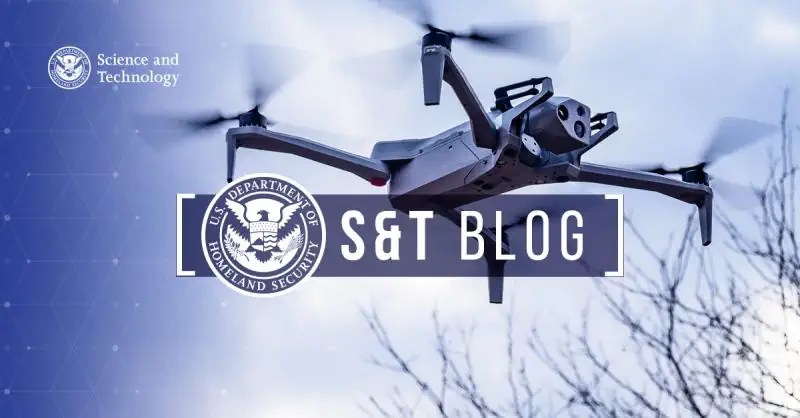
The Science and Technology Directorate (S&T) recently joined nearly 200 other federal national security experts at a November summit to kick off a sweeping three-year effort focused on countering unmanned aircraft systems (C-UAS). In our latest blog, S&T Senior Advisor, the Hon. Daniel J. Tamburello, offers some thoughts on the summit, where future of C-UAS is headed, and how S&T is already impacting how the government combats this emerging threat.
Over the last several years, we have seen unprecedented acceleration and proliferation of advanced small drone technology (sUAS), both on the battlefield and here at home.
Until recently, this high level of sophistication and elevated threat from s-UAS has been mostly limited to the realm of state actors. However, these drones are now within reach of transnational criminal organizations, terrorists, and even lone actors.
The new generations of sUAS represent an extremely serious threat to the homeland. This is why the new interagency collaboration is so timely and necessary.
Joint Interagency Task Force 401(JIATF 401) was launched in August to protect the U.S. military abroad, as well as U.S airspace, civilians, and potential targets here at home. For years, S&T has been at the forefront in this area—see the feature article we released just this week about our C-UAS kinetic mitigation testing in North Dakota—and we are excited to work alongside our federal partners to share our knowledge and scientific expertise.
Representatives from nearly 50 agencies, including the Department of War, Department of Homeland Security, S&T, Transportation Security Administration, Federal Bureau of Investigation, Federal Aviation Administration, and others met in Alexandria, Virginia, for the JIATF 401 summit launch just before Thanksgiving.
As JIATF 401 commander Army Brigadier General Matt Ross said in his remarks, “No one agency can solve this on their own.” I agree. Convening these interagency partners and bringing their (and our) vast experiences and hard-won expertise to bear is the best way to address and defeat this threat.
To achieve and maintain the ultimate goal of U.S. airspace security, communication and data sharing will have to be enhanced. We need to provide a new level of situational awareness between decision-makers at different agencies to track s-UAS and then take the proper actions when authorized to do so.
Coordination, information sharing, and training of federal, state, local, tribal, and territorial law enforcement will also play a key role in future C-UAS efforts to defeat drone attacks.
We need to act now to get ahead of the curve both technologically and logistically—and we have to do it in an affordable and sustainable way. The first step is coordinating with all the U.S. agencies that operate in the C-sUAS space and opening the lines of communication so we can work together on this common and vital national security initiative.
Going forward, it will take a whole-of-government effort to defend, defeat, and deter the malicious drone threat. Safeguarding the homeland’s airspace and joint force training are interconnected and achievable—and we look forward to working hand-in-glove with our federal partners to continue securing our nation.
Visit S&T’s Counter-Unmanned Aircraft Systems (C-UAS) page for more information about our work in this space Contact [email protected] with any related media inquiries.
Related
Discover more from sUAS News
Subscribe to get the latest posts sent to your email.