The fastest way up a cell tower is no longer climbing it
The fastest way up a cell tower is no longer climbing it

Compare cell tower drone maintenance with tower climbing alternatives for telecom safety. Discover cost-benefit analysis and equipment installation procedures.
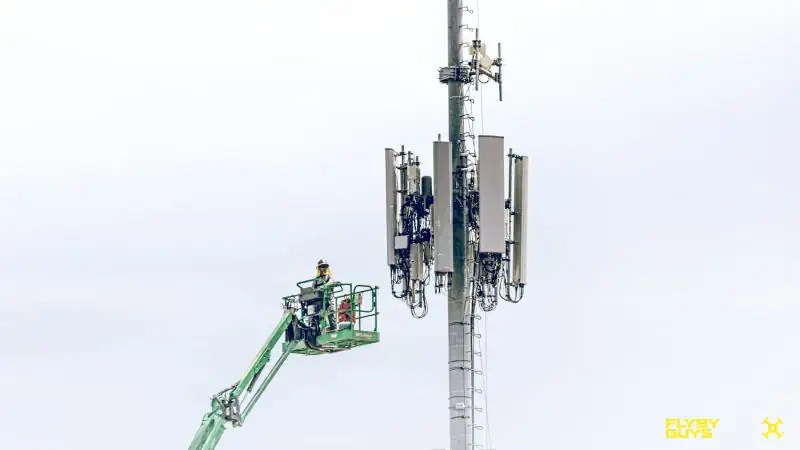
Cell tower maintenance has traditionally meant sending technicians up 200-foot towers with ropes and safety equipment, exposing them to serious fall risks while completing work that can take hours or days. Tower climbing accidents result in multiple fatalities each year, making traditional maintenance methods both dangerous and expensive for telecom operators.
Cell tower drone maintenance eliminates most height-related safety risks while providing faster, more comprehensive assessment capabilities than traditional climbing methods. Professional aerial maintenance systems can complete many inspection and maintenance tasks without putting personnel at risk on dangerous tower structures.
Tower climbing alternatives have evolved dramatically as drone technology advances and telecom operators recognize the safety and cost benefits of aerial maintenance methods. These modern approaches maintain network reliability while protecting worker safety and reducing operational costs.
Safety Comparison Statistics
Tower climbing fatality rates in the telecommunications industry average 10 times higher than general construction work, with falls representing the leading cause of death among tower workers. Professional drone maintenance eliminates fall risks for routine inspection and many maintenance activities.
Injury rates for traditional tower work include not just falls but also struck-by incidents, electrical contacts, and equipment-related injuries that occur during climbing operations. Aerial maintenance reduces exposure to multiple hazard categories simultaneously.
Near-miss incident reports show that traditional tower work creates numerous close-call situations where serious injuries are avoided only through luck or last-minute interventions. Professional aerial methods eliminate many scenarios where near-miss incidents occur.
Workers’ compensation costs for tower climbing operations reflect the high injury rates and severity of tower-related accidents. Drone maintenance reduces insurance costs while protecting valuable workers from preventable injuries.
Cost-Benefit Analysis
Traditional tower maintenance costs include not just technician time but also specialized climbing equipment, safety systems, rescue standby services, and extensive liability insurance. Professional drone services often cost less than traditional methods while providing superior documentation and safety outcomes.
Productivity improvements occur when aerial maintenance eliminates time spent on safety setup, climbing procedures, and equipment positioning that consume significant portions of traditional maintenance schedules. Drone operations complete many tasks in hours rather than days.
Equipment transportation costs decrease when heavy tools and replacement parts don’t need to be carried up tower structures manually. Aerial delivery systems can position equipment efficiently while maintaining worker safety on the ground.
Weather delay costs affect traditional tower work more severely than drone operations. Climbing operations require ideal weather conditions while aerial maintenance has broader weather windows that reduce delay-related expenses.
Equipment Installation Procedures
Antenna Installation and Positioning
Precision antenna positioning through drone-guided installation ensures optimal signal coverage and network performance. Professional aerial guidance provides positioning accuracy that supports network optimization while maintaining installer safety.
Heavy equipment lifting procedures use specialized drone-mounted systems or ground-based equipment guided by aerial spotting. Professional coordination reduces lifting risks while ensuring proper equipment positioning.
Cable routing verification through aerial inspection ensures that RF cables and fiber connections follow optimal paths and receive proper protection from environmental damage. Professional aerial assessment prevents cable problems that could affect network performance.
Connector installation quality control uses detailed aerial photography to verify proper installation of critical RF connections. Professional documentation ensures connection reliability while supporting warranty compliance.
Equipment Replacement and Upgrades
Component removal procedures use aerial assessment to plan safe and efficient equipment removal that minimizes tower climbing time. Professional planning reduces worker exposure while ensuring complete equipment recovery.
New equipment integration verification ensures that upgraded components integrate properly with existing tower infrastructure. Professional aerial inspection verifies integration quality while supporting system performance optimization.
System testing coordination uses aerial monitoring to verify proper operation of newly installed or upgraded equipment. Professional testing support ensures system reliability while maintaining worker safety.
Documentation requirements for equipment installation include detailed photographic records that support warranty claims and regulatory compliance. Professional aerial documentation provides comprehensive installation records.
Weather Condition Considerations
Wind speed limitations for traditional tower climbing typically restrict work to conditions under 25 mph, while professional drone operations can often proceed safely in winds up to 35 mph. This broader weather window reduces maintenance delays and improves service reliability.
Temperature extremes affect traditional tower work more severely than aerial operations. Climbing in extreme heat or cold creates additional safety risks and reduces worker productivity, while drone operations maintain effectiveness across broader temperature ranges.
Precipitation restrictions prevent most traditional tower climbing due to slip hazards and electrical safety concerns. Professional drone maintenance can often proceed in light precipitation conditions that would halt traditional work completely.
Lightning and storm safety requires immediate evacuation for traditional tower workers but allows aerial operations to resume more quickly after weather events pass. Professional aerial methods provide faster response to urgent maintenance needs.
Inspection Capabilities Comparison
Visual Assessment Quality
High-resolution aerial photography provides detailed documentation of tower conditions that often exceeds what climbing technicians can observe and record manually. Professional aerial imaging captures comprehensive tower condition data from multiple angles and distances.
Access to difficult areas through aerial inspection includes tower tops, antenna arrays, and structural components that are dangerous or time-consuming to reach through traditional climbing methods. Professional aerial access provides comprehensive coverage without safety compromises.
Documentation consistency improves when aerial inspection follows systematic procedures that eliminate variability in coverage and quality that affects traditional manual inspections. Professional aerial documentation provides reliable condition assessment data.
Real-time analysis capabilities allow immediate assessment of problems discovered during aerial inspection, supporting rapid decision-making about maintenance needs and priorities. Professional aerial analysis provides timely maintenance guidance.
Technical Measurement Capabilities
RF signal measurement through aerial positioning provides accurate field strength and coverage data that supports network optimization. Professional aerial measurement capabilities support technical analysis and network performance improvement.
Structural alignment verification uses aerial measurement to identify tower plumb and antenna positioning problems that affect network performance. Professional measurement provides accuracy needed for technical assessment.
Clearance measurement capabilities verify safe distances between equipment, structures, and vegetation through aerial assessment. Professional clearance verification supports safety compliance and regulatory requirements.
Environmental monitoring through aerial sensors provides data on temperature, humidity, and other factors that affect equipment performance and tower conditions. Professional environmental monitoring supports predictive maintenance and performance optimization.
Maintenance Task Adaptation
Routine Inspection Conversion
Monthly visual inspections convert readily from climbing-based procedures to comprehensive aerial assessment that provides superior coverage and documentation. Professional aerial inspection provides more thorough condition assessment in less time.
Quarterly detailed inspections benefit from aerial capabilities that access all tower components safely and efficiently. Professional aerial inspection ensures comprehensive coverage without exposing workers to height hazards.
Annual compliance inspections require detailed documentation that aerial methods provide more efficiently than traditional climbing procedures. Professional aerial compliance inspection supports regulatory requirements while improving safety outcomes.
Emergency damage assessment after storms or accidents benefits from rapid aerial deployment that provides immediate situation assessment without exposing workers to potentially unstable structures.
Limited Physical Intervention
Component tightening and adjustment procedures that require physical contact still need traditional climbing but benefit from aerial pre-inspection that identifies specific problems and optimizes climbing efficiency. Professional aerial guidance reduces climbing time and exposure.
Small part replacement procedures can sometimes use aerial delivery systems that position replacement components efficiently while minimizing climbing requirements. Professional aerial support reduces traditional climbing needs.
Cable connection work that requires physical access benefits from aerial inspection that identifies specific connection problems and guides efficient repair procedures. Professional aerial assessment optimizes climbing productivity.
Cleaning and maintenance procedures increasingly use aerial methods for inspection and assessment while reserving climbing for tasks that absolutely require physical contact with tower components.
Technology Integration Benefits
Remote Monitoring Integration
Cellular network monitoring systems benefit from aerial inspection data that provides context for performance problems and equipment alerts. Professional aerial data integration enhances network management capabilities.
Predictive maintenance systems use aerial condition monitoring to identify developing problems before they cause network failures. Professional aerial monitoring supports predictive maintenance programs that reduce emergency repairs.
Asset management integration allows aerial inspection findings to feed into equipment lifecycle management and replacement planning systems. Professional integration supports strategic asset management and capital planning.
Work order optimization uses aerial assessment data to plan maintenance activities efficiently and reduce unnecessary climbing operations. Professional integration supports maintenance workflow optimization.
Safety System Enhancement
Personal safety monitoring systems coordinate with aerial operations to provide comprehensive safety oversight during necessary climbing operations. Professional coordination enhances worker protection during traditional maintenance activities.
Emergency response systems benefit from aerial assessment capabilities that provide immediate situation awareness during tower emergencies. Professional aerial response supports emergency management and rescue operations.
Training program enhancement uses aerial documentation to demonstrate proper procedures and safety requirements for tower work. Professional aerial training support improves worker competency and safety awareness.
Compliance monitoring systems incorporate aerial inspection data to demonstrate regulatory compliance and safety program effectiveness. Professional compliance support protects operators from regulatory violations and liability exposure.
Industry Adoption Trends
Major telecom operators increasingly specify aerial inspection and maintenance methods in their safety programs and operational procedures. Industry leadership recognizes aerial methods as best practices for worker protection and operational efficiency.
Insurance industry requirements increasingly favor aerial maintenance methods that reduce claims exposure and demonstrate proactive safety management. Professional aerial programs support favorable insurance terms and coverage.
Regulatory agency guidance encourages adoption of technologies that improve worker safety while maintaining infrastructure reliability. Professional aerial methods align with regulatory expectations for safety improvement.
Technology advancement continues improving aerial maintenance capabilities while reducing costs, making aerial methods increasingly attractive compared to traditional climbing operations.
Professional cell tower maintenance services like those provided by Flyby Guys combine telecommunications expertise with advanced aerial technology to provide comprehensive tower maintenance that improves safety while reducing costs and enhancing service reliability.
Telecom operators working with experienced aerial maintenance providers often discover that systematic aerial maintenance programs provide safety and operational benefits that extend beyond simple cost savings to support comprehensive infrastructure management strategies.
Understanding how cell tower maintenance innovations relate to 5G network deployment requirements helps telecom infrastructure managers develop integrated maintenance approaches that support both legacy network maintenance and advanced technology deployment.
Ready to revolutionize your cell tower maintenance program? Contact Flyby Guys and discover how professional aerial maintenance technology improves worker safety while reducing costs and enhancing network reliability.
Related
Discover more from sUAS News
Subscribe to get the latest posts sent to your email.
Other News in This Category
- Picogrid Awarded Contract to Streamline XVIII Airborne Corps Battlefield Integration
- Donecle Raises €10 Million to Expand Drone-Based Aircraft Inspection Platform
- Is the U.S. Ready for Drone Threats at World Cup Scale?
- Pano Investigation: No Evidence of Russian Drones in Belgium Despite €50m Emergency Spend