FAA backs down on threat to prosecute drone pilots
By DRONELIFE Features Editor Jim Magill
The FAA has apparently backed down on its threat to impose criminal penalties on drone operators flying in the vicinity of federal law enforcement vehicles, after a journalism rights group sued the agency in federal court to strike down its flight restriction.
On Wednesday, the federal agency issued an advisory, which rescinded its controversial NOTAM FDC 6/4375, which had restricted unmanned aircraft from flying within a stand-off distance of 3,000 feet laterally and 1,000 feet above “facilities and mobile assets,” of vehicles belonging to the Department of Defense (DOD), Department of Energy (DOE), and Department of Homeland Security (DHS).
The old NOTAM, which the FAA issued in January, had included penalties for UAV pilots found to be in violation, including the threat of federal criminal prosecution and of FAA administrative action, including the imposition of civil penalties and the revocation of FAA certificates or authorization to operate.
Instead the new, and less explicit, advisory removes the specific flight spacing restrictions around government assets and vehicles and instead urges drone pilots to “exercise caution when flying in proximity,” of federal agencies’ mobile assets. It also takes away the threat of criminal prosecution, but warns that federal agencies “may take action that results in the interference, disruption, seizure, damaging, or destruction of unmanned aircraft deemed to pose a credible safety or security threat to covered mobile assets.”
An attorney for the Reporters Committee for the Freedom of the Press (RCFP), which had sued the FAA to overturn the original NOTAM on First Amendment grounds, hailed the regulatory change as a victory.
“We’re glad to see the FAA rescind its original order, which was an egregious overreach that had serious consequences for reporters nationwide,” attorney Grayson Clary said in a statement.
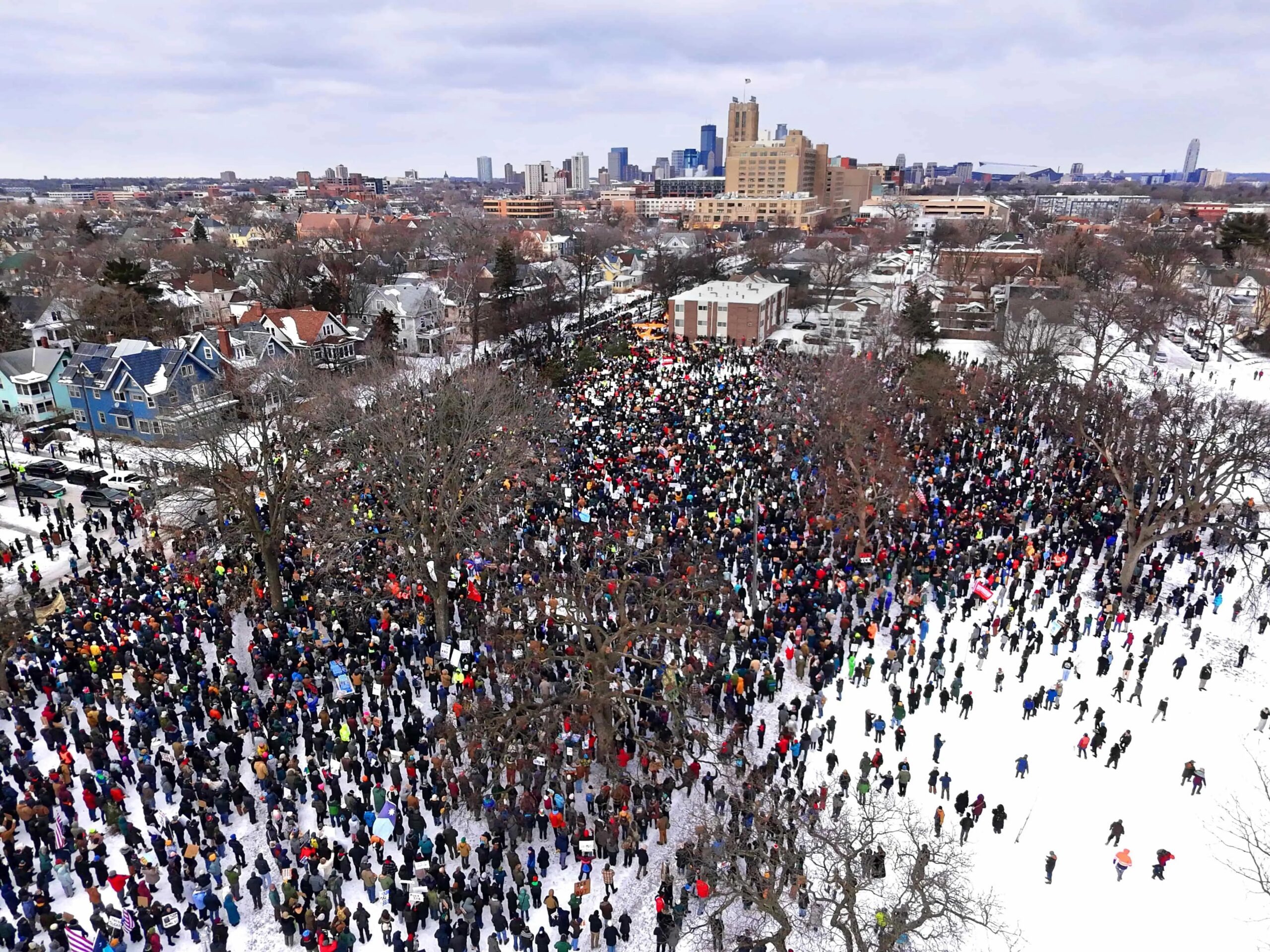
Last month RCFP filed a lawsuit in the U.S. Court of Appeals for the District of Columbia on behalf of Minnesota photojournalist Rob Levine, claiming the original NOTAM restricted his rights to use his drone to take photos and video of immigration protests then taking place in Minneapolis.
On April 9, Clary filed a motion in the case asking the court to “stay the provision of the TFR governing DHS ground vehicles” pending the disposition of the case. The motion argued that the restrictions in the original NOTAM resulted in “a grave chilling effect on the lawful use of drones.”
A spokesman for the FAA declined to comment on whether the FAA decision to rescind its original flight restriction and replace it with the less onerous advisory was related to the ongoing court case.
“The FAA cancelled NOTAM 6/4375 and replaced it with NOTAM 6/2824 to clarify drone operations based on user feedback. The revised NOTAM removes the flight prohibition and instead advises pilots to use caution near protected operations while enabling federal security partners to assess and respond to potential threats,” the spokesman said in an email statement.
He added that persons seeking additional information should contact the federal departments listed in the advisory.
However, Levine and his attorneys viewed the FAA’s actions as a big win for their case.
“It was heartbreaking to have my drones grounded at a time of such importance to my community, but I’m looking forward to getting back up there and getting back to my journalism as soon as possible,” Levine said the RCFP statement.
In an interview with DroneLife, Clary said that the FAA’s action to amend the NOTAM did not go far enough to address the issues originally raised in the lawsuit and added that his team of attorneys planned to continue to litigate the suit against the FAA, seeking a judgement that the agency had overreached in issuing its original TFR.
“This kind of arbitrary back-and-forth from the FAA is exactly the problem, and we intend to make clear to the D.C. Circuit that this restriction never should have been implemented in the first place,” he said in the statement.
Read more:
- News Media Coalition Letter Challenges FAA’s Expansive NOTAM
- FAA NOTAM Bans Drone Flights Near Moving Federal Assets, Prompting Civil Liberties and Operator Concerns
- Photojournalist Challenges FAA Temporary Flight Restriction as First Amendment Violation
 Jim Magill is a Houston-based writer with almost a quarter-century of experience covering technical and economic developments in the oil and gas industry. After retiring in December 2019 as a senior editor with S&P Global Platts, Jim began writing about emerging technologies, such as artificial intelligence, robots and drones, and the ways in which they’re contributing to our society. In addition to DroneLife, Jim is a contributor to Forbes.com and his work has appeared in the Houston Chronicle, U.S. News & World Report, and Unmanned Systems, a publication of the Association for Unmanned Vehicle Systems International.