Deep sea silence: the loss of the US Navy’s MQ-4C Triton
Deep sea silence: the loss of the US Navy’s MQ-4C Triton

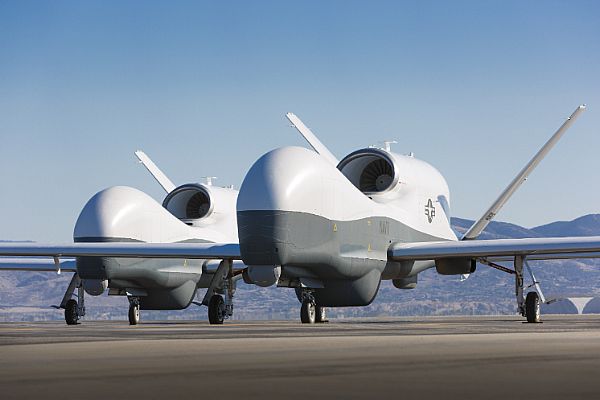
The US navy has officially confirmed the loss of an MQ-4C Triton unmanned surveillance aircraft over the Persian Gulf. Now categorised as a class A flight mishap, the incident occurred on 9 April 2026, just one day after the US and Iran agreed to a temporary ceasefire to pause the intense combat of Operation Epic Fury.
The drone was conducting a routine maritime reconnaissance patrol over the Persian Gulf and the Strait of Hormuz, preparing for its return leg to Naval Air Station Sigonella in Italy. While cruising at an altitude of approximately 52,000ft, the aircraft’s transponder began broadcasting code 7400, the standard declaration for a lost communication link between the aircraft and its remote operators.
Minutes later, the signal shifted to code 7700, indicating a general emergency. Open-source flight tracking data showed the drone descending rapidly and uncontrollably, dropping from 52,000ft to below 10,000ft in under 15 minutes. Before its signal vanished entirely, the aircraft unexpectedly turned north-east towards the Iranian coast.
Manufactured by Northrop Grumman and valued at roughly $240m, the MQ-4C Triton is a high-altitude, long-endurance aircraft that acts as a premier intelligence, surveillance and reconnaissance asset. The platform is equipped with an AN/ZPY-3 multi-function active sensor radar, electro-optical and infrared cameras, and a recently upgraded signals intelligence collection suite.
The US Naval Safety Command confirmed the loss on 14 April 2026. According to the command’s mishap summary report, the event was logged simply: “9 Apr 2026 (Location Withheld – OPSEC) MQ-4C crashed, no injury to personnel”.
The navy’s decision to withhold the precise crash location for operational security suggests that the wreckage has not yet been recovered. This presents a severe counterintelligence liability. If Iranian forces were to retrieve the Triton’s advanced radar and sensor payloads, it would grant them direct insight into classified US collection priorities and technical architecture, echoing Iran’s 2019 recovery of a downed RQ-4A Global Hawk.
While there are currently no hard indications of hostile fire, the possibility of electronic warfare – such as GPS jamming or communications spoofing – cannot be ruled out in the electromagnetically contested environment of the Persian Gulf, alongside the potential for a catastrophic mechanical or software failure.
Strategically, the loss of the Triton immediately degrades persistent US surveillance coverage over one of the world’s most vital and congested maritime corridors. With the US military actively enforcing a naval blockade of Iranian ports and attempting to secure commercial shipping through the Strait of Hormuz, the disappearance of this rare, high-value asset leaves a notable gap in America’s maritime domain awareness.
Related
Discover more from sUAS News
Subscribe to get the latest posts sent to your email.
Other News in This Category
- Echoes of Agusta: How a €50m Drone Panic Sparked Belgium’s Latest Defence Crisis
- Six Takeaways from CIS White Paper on Drone Risks at the FIFA World Cup
- Matternet and SoftBank Robotics America Partner to Scale Drone Delivery Networks
- FAA Reverses Course on Drone Flight Limits Near Federal Operations