Drone Industry Noise
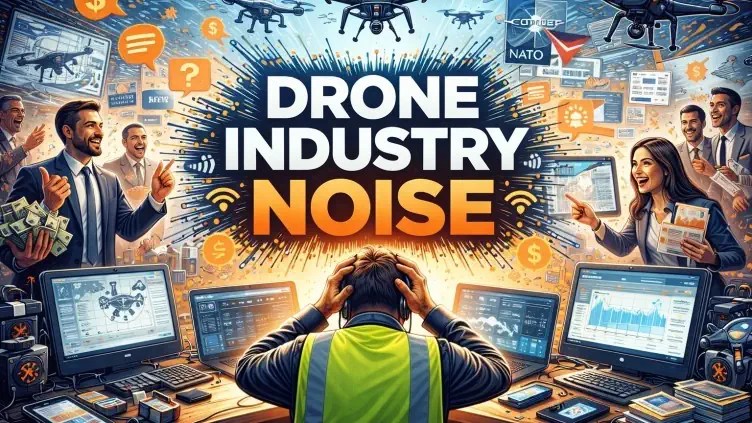
Drone Industry Noise

Let’s face it, most people looking for advice about drones or the drone industry are getting the wrong advice.
There is an enormous amount of noise in the drone sector right now, and it’s doing more harm than good. For an industry that still relies heavily on credibility, safety, and trust, this constant stream of ill-informed guidance is quietly undermining progress.
As someone who flies and does business in the drone industry every day, the trend is hard to ignore. More and more “experts” and consultants are positioning themselves as authorities, despite the fact they don’t actively fly, don’t operate commercially, and don’t carry the real-world risk of running a drone business. Yet they are freely giving advice, often for a hefty fee to startups, authorities, investors, and even regulators.
The problem isn’t advice itself. The problem is detached advice.
Advice Without Skin in the Game
Drone operations evolve daily. Hardware changes. Software updates break workflows. Regulations shift. Insurance expectations tighten. Clients become more demanding. Margins get thinner. Weather still wins. Anyone flying regularly knows that what worked six months ago may already be outdated.
Those who don’t fly or experience the day-to-day life of an operator simply don’t see these changes. They don’t feel the friction between regulation and reality. They don’t experience how a single operational decision can ripple into safety, compliance, cost, and reputation.
Yet these same people confidently advise on business models, compliance strategies, U-space readiness, BVLOS rollouts, and “scaling operations.” From the outside, it sounds convincing. From the cockpit, it often sounds dangerously disconnected.
This is how bad advice becomes normalized, and how drone industry noise is created.
Big Projects, Bigger Promises
From NATO-aligned drone initiatives to U-Space trials and strategic innovation projects, new programs seem to appear almost weekly. On paper, they’re impressive. Slide decks are polished. Buzzwords are abundant. The future always appears just one funding round away.
But the uncomfortable question remains: are these projects realistic?
Too often, they’re built without meaningful operator input. Real operational constraints—airspace complexity, human factors, maintenance cycles, client expectations, liability, are either underestimated or ignored entirely. Instead, projects are framed around what sounds ambitious enough to secure funding or political support.
The result is a growing gap between vision and viability.
When Money Becomes the Metric
As usual, it always comes down to money. How much can be made? How quickly can it scale? Who’s funding it?
But at what cost?
A non-realistic approach, driven by optimism rather than understanding, can bankrupt a company in months. Many of these ventures start the same way: empty promises, inflated timelines, and egos fed just enough to keep the momentum going. Closure and funding become the objective, not sustainable operations.
This isn’t innovation, it’s theatre.
And when the inevitable failure happens, the damage doesn’t stop with the company itself. It ripples outward, making investors more cautious, regulators more conservative, and legitimate operators more frustrated.
The Collateral Damage
The real victims of drone industry noise aren’t the consultants or failed projects. It’s the people who genuinely need help.
New operators trying to enter the market. Public authorities trying to make sense of integration. Investors who want to back something real. Regulators looking for workable frameworks. Clients who simply want safe, reliable services.
Instead of clarity, they’re met with conflicting advice, unrealistic expectations, and recycled talking points that sound impressive but solve nothing. This creates paralysis, mistrust, and ultimately stagnation.
Worse still, it pushes experienced operators further into the background, those who actually understand the problems because they live them every day.
Experience Is Not Optional
The drone industry is no longer in its infancy. We don’t need more hype. We need operational literacy.
Flying matters. Operating under real constraints matters. Paying insurance matters. Dealing with audits matters. Losing contracts matters. Fixing mistakes matters.
Advice that doesn’t account for these realities isn’t just incomplete, it’s irresponsible.
This doesn’t mean there’s no place for consultants, strategists, or policymakers. It means credibility should be earned through exposure to real operations, not just proximity to innovation funding or regulatory discussions.
So What Can Be Done?
First, the industry needs to value operational credibility more than presentation skills. If advice is being given, the question should always be: When did this person last fly? When did they last operate commercially?
Second, operators need a stronger voice in shaping strategy, regulation, and funding decisions. Not as box-ticking stakeholders, but as central contributors.
Third, investors and authorities need to ask harder questions. Not “what’s the vision?” but “how does this work on a bad weather day, with a tired pilot, a delayed approval, and a client who wants results tomorrow?”
Finally, the industry needs to stop confusing potential with progress. Not everything that sounds futuristic is useful, and not everything useful needs to be futuristic.
Cutting Through the Noise
Drone industry noise thrives in the absence of accountability. It grows when experience is optional and optimism goes unchecked. If the sector wants to mature, truly mature, it needs to listen less to those who talk about drones, and more to those who actually fly them.
Because the future of the drone industry won’t be built by noise.
It will be built by people who understand the difference between theory and reality, and are willing to operate in both.
Related
Discover more from sUAS News
Subscribe to get the latest posts sent to your email.
Other News in This Category
- SkySafe and University of Illinois Urbana-Champaign Extend Partnership, Setting New Standard for Drone Detection and Airspace Intelligence
- BRINC Drones and Nova Software Company Partner toDeliver Advanced Aerial Mapping for Public Safety Agencies
- Prodrone Debuts All-Japanese Industrial Drone
- Uruguayan Government Announces New Drone Dispatch Program