PM UAS – Short/Vertical Takeoff and Landing (S/VTOL)
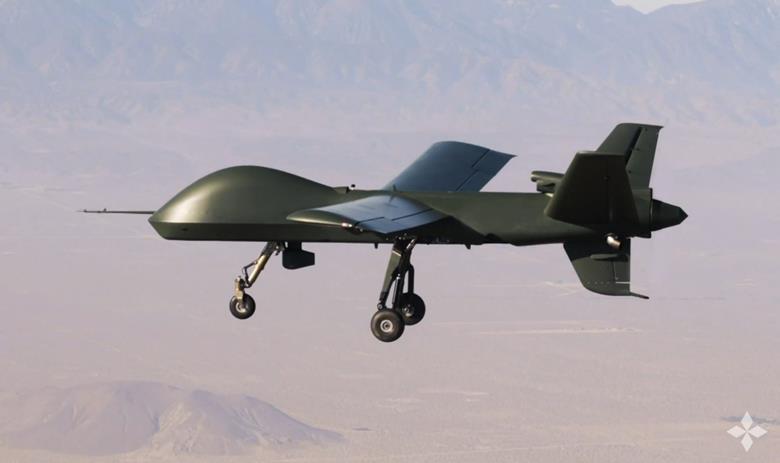
PM UAS – Short/Vertical Takeoff and Landing (S/VTOL)

One Nation Innovation is facilitating the Group 4+ UAS | Short/Vertical Takeoff and Landing (S/VTOL) Challenge. This initiative aims to effectively communicate its dual objectives to both Army decision-makers and industry partners, ensuring a comprehensive understanding of the scope and goals being pursued.
The Group 4+ UAS | S/VTOL Challenge will articulate future priorities for S/VTOL unmanned aircraft. Additionally, the Challenge seeks to investigate and collect data for technologies in a potential Government Furnished Equipment (GFE) ecosystem for modular components, which will enable rapid integration and informed decision-making regarding future vendor designs and strategies.
This Challenge is designed to serve as an early engagement to inform industry of the Army’s emerging desired characteristics for the Group 4+ UAS | S/VTOL platform. The Army will utilize the Challenge process to ensure that industry remains informed of all updates to the Group 4+ UAS | S/VTOL efforts, thereby encouraging continued feedback, investment, and innovation within this domain.
This is a request for participation in the Group 4+ UAS | S/VTOL Challenge only. This Challenge is issued solely for information and planning purposes and to identify interested sources. It does not constitute an invitation to bid, a Request for Proposal (RFP), a solicitation, a request for quote, or a commitment to issue such documentation in the future.
This request for information does not obligate the U.S. Army to contract for any supplies or services. Furthermore, the U.S. Army is not currently seeking proposals and will not accept unsolicited proposals. Responders are advised that the U.S. Government will not pay for any information or administrative costs incurred in response to this Group 4+ UAS | S/VTOL Challenge; all costs associated with responding to this Challenge will be solely at the interested party’s expense.
Not responding to this Challenge does not preclude participation in any future RFP, should one be issued. If a solicitation is released, it will be synopsized on the One Nation Innovation and SAM.gov websites. It is the responsibility of potential responders to monitor these sites for additional information pertaining to the Group 4+ UAS | S/VTOL subject.
The information provided in the Challenge is subject to change and is not binding on the Government. The U.S. Army has not made a commitment to procure any of the items discussed, and the release of this Challenge should not be construed as such a commitment or as authorization to incur costs for which reimbursement would be required or sought. All submissions will become Government property and will not be returned.
Challenge Phases:
09 December 2025 – 08 January 2026: White paper responses are due 30 days after the release of this announcement. These responses will be reviewed and utilized to further inform Army leaders and stakeholders about potential air-vehicle solutions available to meet the Group 4+ UAS | S/VTOL requirements, as well as to identify potential hardware and software solutions that could be part of the U.S. Army’s Government Furnished Equipment (GFE) package for integration into vendor platforms.
The U.S. Army and the Program Manager reserve the right to not accept any vendor responses beyond the cutoff date. There is no guarantee that any submissions received after the date range listed above will be reviewed or considered in this information gathering effort to inform future industry engagement or refinement of requirements.
Overall Objective
The overall objective of the Group 4+ UAS | Short/Vertical Takeoff and Landing (S/VTOL) Challenge is to establish a dual engagement effort between the U.S. Army and industry partners. This Challenge aims to effectively communicate the Army’s desired characteristics for S/VTOL platforms while simultaneously soliciting valuable feedback from industry regarding the viability of these platforms and the integration of Government Furnished Equipment (GFE) components.
Through this collaborative approach, the U.S. Army seeks to articulate its operational needs and future priorities for S/VTOL unmanned platforms, ensuring that industry partners are well-informed of the specifications and capabilities required for successful integration. By providing detailed information on desired characteristics, the Army is fostering an environment conducive to innovation, encouraging industry to propose solutions that align with these requirements.
Vendors are invited to submit information on S/VTOL platforms that meet the U.S. Army’s desired characteristics for Group 4+ UAS | S/VTOL air-vehicles, as well as for the weapon systems components listed below. It is important to note that the desired characteristics of the weapon system are available by request only. T
o obtain these desired characteristics, interested vendors must demonstrate possession of Cybersecurity Maturity Model Certification (CMMC) Level 2 and include this verification in their request. Upon confirmation of the vendor’s CMMC Level 2 capability, the desired characteristics will be provided to assist vendors in their response to the Group 4+ UAS | S/VTOL Challenge.
Desired Characteristics:
- Group 4+ UAS | S/VTOL Air-Vehicle / Platform
- Government Furnished Equipment (GFE)
- Sensors
- EO/IR Sensor
- Synthetic Aperture Radar (SAR) / Moving Target Indicator (MTI)
- Light Detection and Ranging (LiDAR)
- Atmospheric Sensing Capabilities
- Radio Detection and Ranging (RADAR)
- Interoperability of the above items with other avionics on the platform
- Autonomy
- Autonomous Operations
- Collision Avoidance
- Common Operational Picture (COP) Autonomy
- Sensor and Computing Dependency
- Onboard Mission Software Architecture
- Onboard mission software and architecture
- Control of radios and command and control (C2)
- Survivability Systems (ASE), Electronic Countermeasures (ECM), etc.
- Sensor systems mission software
- Weapon systems (Launched Effects, stores management, stores control,
arming, firing, and safing) - Mission control systems (adapting operations in real-time)
- C5ISR Modular Open Suite of Systems (CMOSS) chassis
- Communication Protocols and Standardized Messaging Formats
- Model-Based Systems Engineering (MBSE)
- Interoperability
Cybersecurity: Description of experience with key cybersecurity standards and policies This structured approach ensures that industry partners are equipped with the necessary information to provide informed and relevant responses to the Army. Your collaboration is vital to the success of this initiative, and we look forward to your engagement in the Group 4+ UAS | S/VTOL Challenge.
Responses:
Response Requirements: Interested parties are requested to respond to the S/VTOL Challenge with a single white paper, no more than eight (8) pages in total length to meet the capabilities and potential materiel/service solutions, including the mandatory response questions below. Vendors are encouraged to submit for multiple sections within the S/VTOL Challenge but will be held to the eight-page limit for the entire challenge. The white paper should include what is available for immediate aircraft integration within one year, what will be available within three years, and what will be available long term (after 2030).
Responses are due no later than 08 January 2026 at 5:00 PM CST.
Responses must be submitted electronically to the designed email address by the specified deadline. Verbal questions will not be accepted, and questions must not contain proprietary or classified information. The Government does not guarantee that questions received after the specified deadline will be answered.
Points of Contact: Interested vendors should contact One Nation Innovation (ONI) to join the Group 4+ UAS | S/VTOL Challenge. The vetting process will take less than 24 hours.
Problem Statement:
The U.S. Army is confronting challenges as legacy platforms face obsolescence in Multi-Domain Operations (MDO). In alignment with the Army’s Continuous Transformation, there is a pressing need for reducing runway dependency, allowing critical weapon systems to meet the challenges of an evolving battlefield. Division formations require an organic, runway-independent Uncrewed Aircraft System (UAS)
that offers increased Size, Weight, Power, and Cost (SWaP-C), modularity, and interoperability. These capabilities are essential for Reconnaissance, Surveillance, and Target Acquisition (RSTA), deep targeting, massing effects, advanced Intelligence, Surveillance, and Reconnaissance (ISR), enhanced lethality, and leveraging autonomy in Denied, Disrupted, Intermittent, and Limited (DDIL) environments during Large-Scale Combat Operations (LSCO).
To address these needs, the Army envisions a Group 4+ platform that is fielded at the Division echelon. This long-endurance, multi-mission payload system will enable advanced teaming and enhanced lethality while supporting deep situational awareness and shaping operations. It is critical for ensuring freedom of maneuver and will serve as a testbed for a future ecosystem of operational and strategic UAS capabilities to support LSCO at depth. The Army aims to prevent the degradation of capabilities related to target detection, identification, attack network extension, and RSTA due to aging platforms and obsolescence challenges.
The S/VTOL ecosystem is vital for the Army to rapidly integrate and evolve technologies essential for LSCO, including UAS control systems, SATCOM networks, Next Generation Command and Control (NGC2) connectivity, payloads, and system software/AI. This adaptable architecture directly supports Army modernization priorities and ensures operational superiority in future conflicts. By addressing these challenges, the Army will enhance its operational effectiveness and maintain a competitive edge in complex operational environments.
More
https://sam.gov/workspace/contract/opp/af0b4043b27c4b64bf3987e06d46a04c/view
Related
Discover more from sUAS News
Subscribe to get the latest posts sent to your email.