Shoot First, Ask the FAA Later: How the Military shot down a Customs and Border Protection Drone
Shoot First, Ask the FAA Later: How the Military shot down a Customs and Border Protection Drone

The American south-west has become an unwitting testing ground for a dangerous power struggle between civil aviation regulators and security agencies eager to deploy unproven, high-energy weaponry in domestic airspace. In the latest humiliating blunder, the US military used a laser to shoot down a “seemingly threatening” drone near the US-Mexico border, only to discover the aircraft actually belonged to the US Customs and Border Protection (CBP) agency.
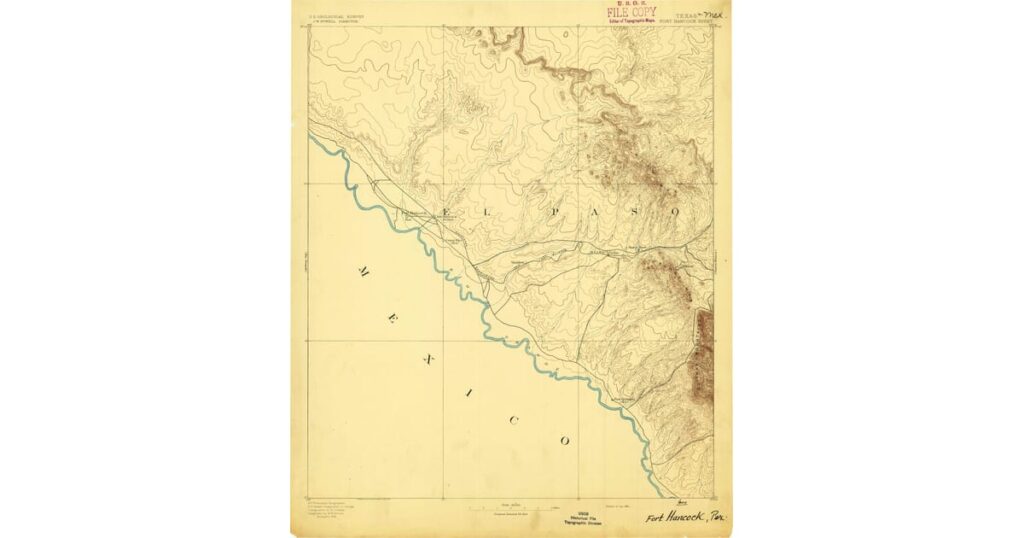
This spectacular case of friendly fire prompted the Federal Aviation Administration (FAA) to hastily close airspace around Fort Hancock, Texas. It is merely the latest in a string of alarming, uncoordinated incidents that have left lawmakers furious and the public caught in the crossfire of an increasingly reckless border strategy.
“Our heads are exploding over the news,” said US Representative Rick Larsen, who joined other top Democrats in condemning the Trump administration for its sheer incompetence and for sidestepping bipartisan efforts to improve inter-agency communication. Senator Tammy Duckworth rightfully demanded an independent investigation, stating that the administration’s actions continue “to cause chaos in our skies”.
The escalating friction appears deeply intertwined with the administration’s aggressive doctrinal pivot, notably its rebranding of the Department of Defense to the “Department of War”. The shift, intended to signal “maximum lethality” and a departure from “tepid legality,” has rapidly trickled down to operational protocols. Security agencies defend these unprecedented inter-agency operations as necessary to mitigate threats from Mexican cartels, noting that more than 27,000 drones were detected near the southern border in the latter half of 2024 alone.
Yet, the urge to deploy new technology is dangerously outpacing the safeguards designed to control it. This latest drone debacle comes just weeks after an equally farcical and highly disruptive episode near Fort Bliss. Eager to test directed-energy weapons without fully coordinating with the FAA, Pentagon officials fired upon what they believed was a cartel drone. The target, it was later revealed, was not a national security threat, but a child’s Mylar party balloon.
The ensuing chaos forced the FAA administrator, Bryan Bedford, to unilaterally close the airspace over El Paso for seven hours, designating it “National Defense Airspace”. This sudden closure effectively turned a city of nearly 700,000 people into a no-fly zone, stranding travellers and diverting medical evacuations to ensure civilian pilots were not blinded by military lasers.
The friction is fundamentally a clash of cultures. The FAA operates on a safety-first model, while newly emboldened security agencies increasingly view these safety protocols as bureaucratic hurdles. As General Glen VanHerck of US Northern Command noted during the 2023 Chinese balloon incident, detecting small airborne objects remains a significant “domain awareness gap”. However, attempting to fill that gap with high-energy lasers in populated areas—and frequently misidentifying friendly drones and party balloons in the process—suggests a worrying failure in the sensor technology used to justify such kinetic action.
When national security is repeatedly used to override civilian safety protocols, it invites disaster. The shoot-down of a party balloon in El Paso and the friendly-fire destruction of a CBP drone in Fort Hancock serve as glaring warnings: the skies are growing increasingly crowded, and the unilateral deployment of experimental military hardware ensures that it is inevitably the public who pays the price.
Related
Discover more from sUAS News
Subscribe to get the latest posts sent to your email.